
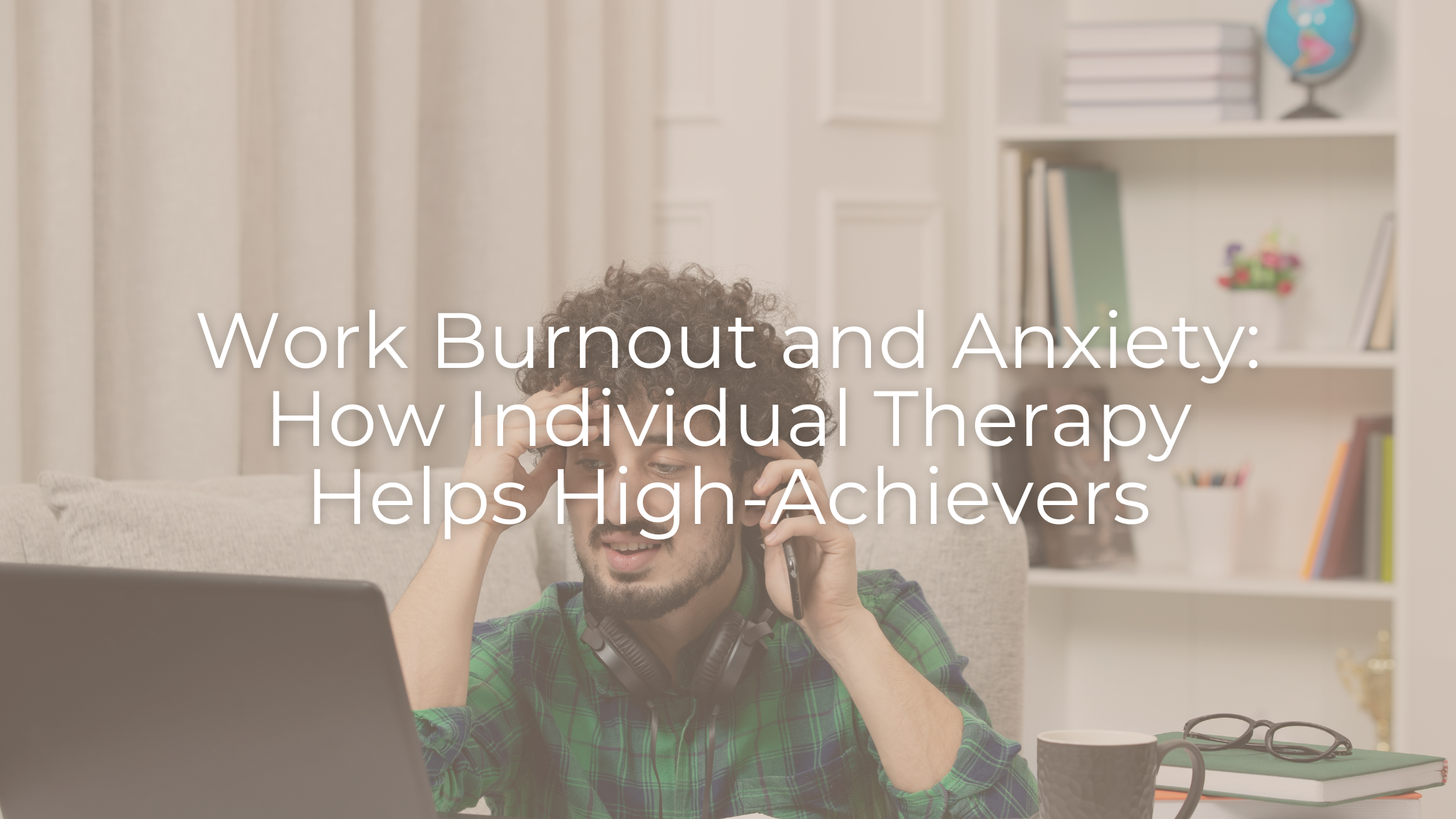
High-achievers are often praised for their dedication, ambition, and ability to perform under pressure. But constantly striving to meet expectations, achieve more, and stay productive can gradually take a toll on your mental health. Over time, the pressure to keep pushing forward can lead to burnout, anxiety, and emotional exhaustion.
Many professionals don’t recognize these warning signs until work begins affecting their health, relationships, and overall well-being. The good news is that individual therapy doesn’t ask you to lower your ambitions.
Instead, it helps you understand the patterns driving burnout and anxiety while building healthier ways to manage stress, maintain balance, and continue succeeding without sacrificing your well-being.
How Individual Therapy Helps High-Achievers Manage Burnout and Anxiety
Burnout and anxiety don’t mean you’ve lost your ability to succeed. Personalized therapy helps you identify the factors driving chronic stress, develop healthier coping strategies, and create a more sustainable approach to achieving your goals.

High-Achievers Often Experience Burnout Differently
Burnout isn’t simply feeling tired after a busy week. It is a state of emotional, mental, and physical exhaustion caused by prolonged stress.
High-achievers often continue meeting deadlines and performing well, even while feeling overwhelmed. Because they appear successful on the outside, their struggles often go unnoticed by others and sometimes by themselves.
Anxiety and Burnout Often Occur Together
Burnout and anxiety are closely connected, but they are not the same.
Burnout develops from chronic workplace stress, while anxiety involves persistent worry and fear that may extend beyond work. However, burnout can increase anxiety, and ongoing anxiety can make burnout worse, creating a cycle that’s difficult to break without support.
Constant Pressure to Perform Can Keep Your Mind in “Work Mode”
Many high-achievers find it difficult to switch off after work.
They may continue thinking about unfinished tasks, worry about making mistakes, or constantly plan for the next project. Even during evenings or weekends, their mind remains focused on work.
Over time, this constant mental activity prevents genuine rest and increases feelings of anxiety and exhaustion.
Perfectionism Can Make Burnout Worse
Many successful professionals set extremely high standards for themselves.
While striving for excellence can be motivating, perfectionism often creates constant self-criticism and fear of falling short. Small mistakes may feel like major failures, leading to increased stress and reduced confidence.
Individual therapy for burnout and anxiety helps people replace unrealistic expectations with healthier, more balanced standards while reducing the self-criticism that often fuels burnout.
How Burnout Affects Your Life Beyond Work

Burnout doesn’t stay at work when the workday ends.
It can affect your sleep, relationships, physical health, motivation, and overall quality of life. You may feel emotionally detached from loved ones, lose interest in hobbies, or become impatient over small inconveniences.
Personalized therapy helps identify these early warning signs and provides strategies to prevent burnout from affecting other areas of your life.
Ignoring Your Own Needs Can Increase Burnout
People who are driven to succeed often become skilled at caring for everyone else’s responsibilities while neglecting their own.
You may skip meals, sacrifice sleep, avoid taking breaks, or continue working despite feeling exhausted because slowing down feels unproductive.
Therapy helps you recognize these patterns and develop healthier routines that support both your productivity and well-being.
Individual Therapy Helps You Identify the Habits Fueling Burnout
Burnout is often driven by both workplace demands and the habits people develop to cope with them.
Therapy helps identify the patterns that contribute to chronic stress, such as perfectionism, difficulty saying no, fear of disappointing others, people-pleasing, or tying self-worth to professional achievement.
Recognizing these patterns is the first step toward changing them. Therapy also helps you understand why these patterns developed and how they continue to contribute to stress. With greater self-awareness, it becomes easier to replace them with healthier ways of thinking and responding.
Individual Therapy Teaches Healthier Ways to Manage Stress
Individual therapy provides practical tools that help you manage workplace stress while continuing to pursue your professional goals in a healthier and more sustainable way.
During therapy, you’ll learn practical strategies that can be applied in everyday work situations, such as:
- Set realistic boundaries at work.
- Challenge perfectionistic thinking.
- Manage anxiety before it becomes overwhelming.
- Improve work-life balance.
- Develop healthier coping strategies during stressful periods.
- Build resilience without relying on constant productivity.
These skills support long-term success rather than temporary relief.
| Common Challenge | How Individual Therapy Helps |
| Perfectionism | Develops healthier expectations |
| Constant work stress | Builds practical coping strategies |
| Difficulty saying no | Strengthens healthy boundaries |
| Anxiety about performance | Improves emotional regulation |
| Poor work-life balance | Encourages sustainable routines |
Individual Therapy Helps You Develop a Healthier Definition of Success
Many high-achievers measure success only by promotions, achievements, or productivity.
Therapy encourages you to develop a broader definition of success that also includes your physical health, relationships, emotional well-being, and personal fulfillment.
This shift often reduces anxiety while helping you maintain high performance in a healthier, more sustainable way.
While these strategies can make a significant difference, many people find they are easier to apply with guidance from an experienced therapist.
How Dr. Christopher Joaquim Helps High-Achievers Overcome Burnout and Anxiety
High-achievers often believe they simply need to “push through” burnout, but continuing to ignore the problem usually makes it worse. With more than 21 years of experience, Dr. Christopher Joaquim helps professionals understand the patterns that keep them trapped in cycles of stress, overwork, and chronic anxiety.
Through individualized therapy, he helps clients:
- Recognize unhelpful thought patterns.
- Reduce perfectionism and excessive self-pressure.
- Establish healthier boundaries at work.
- Develop practical coping strategies for workplace stress.
- Build long-term emotional resilience.
By combining evidence-based approaches such as Cognitive Behavioral Therapy (CBT), mindfulness, and solution-focused techniques, he helps clients perform at a high level while protecting their mental health and overall well-being.
Every treatment plan is tailored to each person’s work environment, personal goals, and unique challenges, helping clients build practical skills they can use long after therapy ends.
Final Thoughts
Individual therapy doesn’t ask you to give up your ambition. Instead, it helps you manage stress, overcome burnout, and pursue success in ways that are healthier, more balanced, and sustainable over the long term.
With the right support, it’s possible to reduce burnout, manage anxiety more effectively, and continue achieving your goals without compromising your mental health.
If work burnout or anxiety is affecting your daily life, Dr. Christopher Joaquim offers personalized individual therapy to help you reduce workplace stress, overcome unhelpful patterns, and build healthier strategies for long-term success and emotional well-being.
Frequently Asked Questions
Can individual therapy help with work burnout?
Yes. Individual therapy helps you understand the patterns contributing to burnout, such as perfectionism, people-pleasing, or difficulty setting boundaries. It also provides practical strategies to manage stress, improve work-life balance, and prevent burnout from returning.
How do I know if I’m experiencing burnout or just normal work stress?
Occasional work stress usually improves after rest or time away from work. Burnout tends to last longer and may leave you feeling emotionally exhausted, unmotivated, detached from your work, or overwhelmed even after taking a break.
Can work burnout lead to anxiety?
Yes. Ongoing workplace stress can increase anxiety by keeping your mind and body in a constant state of alertness. Burnout and anxiety often occur together, making it more difficult to manage daily responsibilities without support.
What happens during individual therapy for burnout and anxiety?
Your therapist will help you identify the factors contributing to burnout, understand unhelpful thought patterns, and develop healthier coping strategies. Therapy is tailored to your unique experiences, goals, and workplace challenges.
Can I recover from burnout without leaving my job?
In many cases, yes. Recovery often involves making healthier changes to how you manage stress, set boundaries, and respond to workplace demands. Individual therapy can help you make these changes while continuing your career.
How can therapy help with perfectionism at work?
Therapy helps you recognize unrealistic expectations and the self-critical thinking that often fuels perfectionism. It teaches healthier ways to strive for excellence without placing constant pressure on yourself.
Who can benefit from individual therapy for work burnout?
Individual therapy can benefit professionals who feel emotionally exhausted, constantly anxious about work, struggle to switch off after work, or find that stress is affecting their relationships, sleep, or overall well-being.
When should I seek therapy for work burnout?
If work-related stress is affecting your sleep, relationships, physical health, motivation, or daily life, it may be time to seek professional support. Early intervention can help prevent burnout from becoming more severe and improve your overall well-being.