
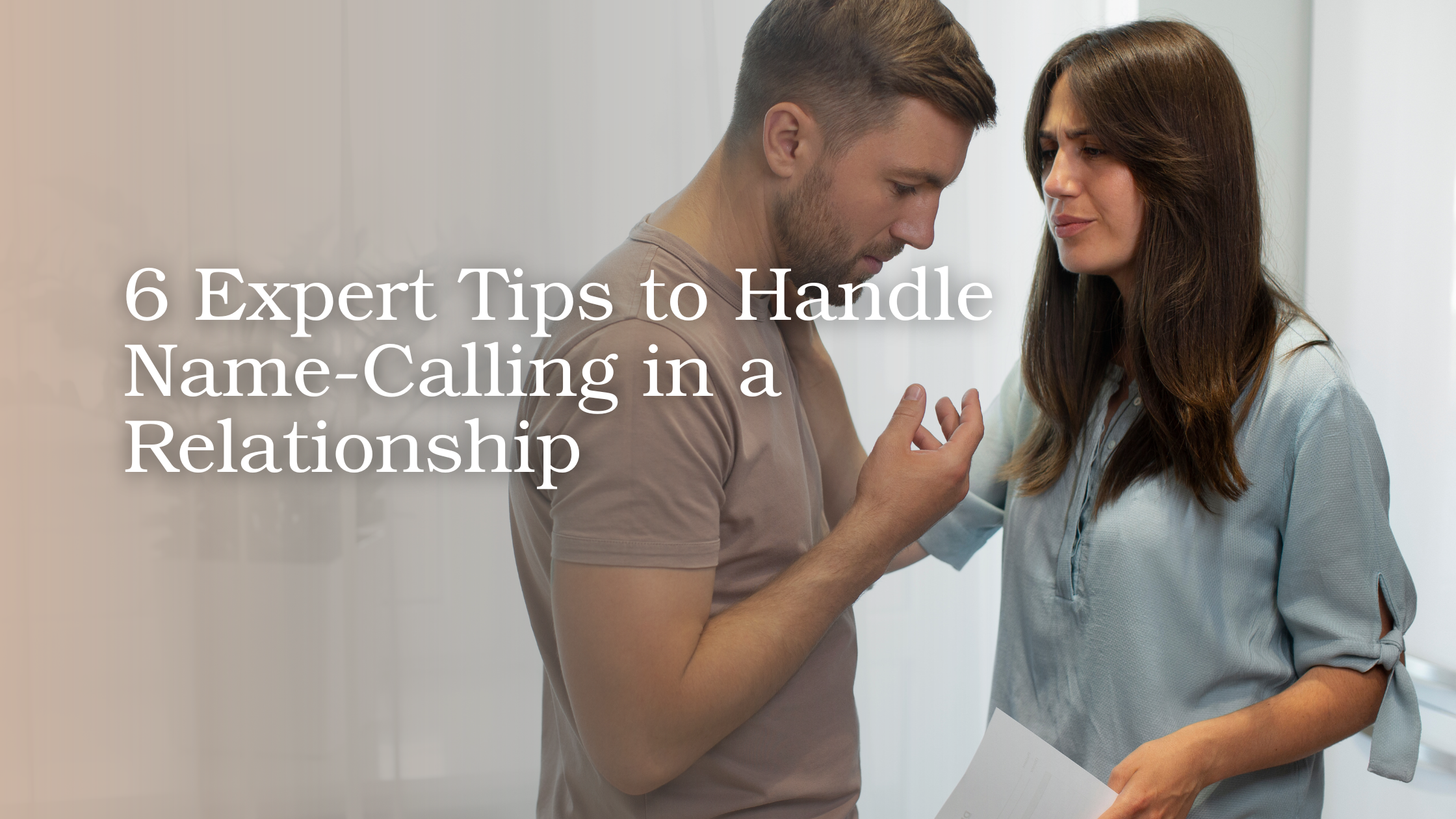
Name-calling can turn a small disagreement into a painful conflict. If you or your partner regularly use hurtful names during arguments, you may wonder how to stop the pattern and rebuild respect.
Repeated name-calling can affect trust, emotional safety, and communication. The good news is that couples can learn healthier ways to handle anger and disagreements.
In this article, we’ll look at 6 ways to handle name-calling in a relationship, set healthier boundaries, and improve communication.
How to Handle Name-Calling in a Relationship
Name-calling during arguments can happen for different reasons. A person may use hurtful language when they feel angry, frustrated, rejected, unheard, or overwhelmed and do not know how to express those emotions directly.
In some relationships, name-calling can also become a learned communication pattern. If insults have become a familiar way of handling conflict, partners may begin repeating the behavior without stopping to consider its impact.
However, understanding why name-calling happens does not excuse it. A useful first step is to identify what happens before the behavior, take responsibility for the words used, and develop healthier ways to communicate anger and disagreement.
1. Understand Why Name-Calling Can Be Harmful
Name-calling may seem like “just words” during an argument, but repeated insults can hurt a partner’s feelings, damage trust, and make it harder to feel emotionally safe in the relationship.
Why it matters:
- Repeated name-calling can undermine self-esteem and emotional security.
- It replaces trust with fear and self-doubt.
- Over time, it can make one partner withdraw or become defensive.
What to do:
- Acknowledge the pain those words cause, even if they weren’t intentional.
- Discuss how each of you feels after an argument. Use calm language like, “When you called me that, I felt hurt and disrespected.”
- Avoid minimizing or joking about it later. Healing begins when both partners take it seriously.

2. Pause Before Responding
During a heated argument, strong emotions can make it harder to choose your words carefully. Taking a short pause can help prevent the conversation from becoming more hurtful.
The power of a pause: Taking a few moments to breathe before replying can help create space between the emotion and your response. This small act can prevent a hurtful exchange from spiraling.
Try these techniques:
- Take a deep breath or a short walk to cool down before responding.
- Use phrases like, “I need a minute to think,” or “Let’s take a break and talk calmly.”
- Focus on your tone and posture; soften your body language to show openness.
Why it works:
- It helps both partners move from reaction to reflection.
- It encourages communication based on reason, not emotion.
When partners learn to pause, they create space for compassion rather than confrontation. This same pause-before-reacting principle is central to how tone of voice affects relationship conflict more broadly.
3. Understand Your Emotional Triggers
Name-calling can sometimes happen when a person feels rejected, frustrated, unheard, or insecure during conflict. Understanding what triggers the reaction can help couples work on the pattern.
Ask yourself:
- What situation usually causes me to lash out?
- What emotions do I struggle to express without anger?
- Are these feelings tied to past experiences or insecurities?
- What happens immediately before I start using insulting language?
Practical exercises:
- Keep a journal after arguments to note what triggered your emotions.
- Share those reflections during calm moments, not during a fight.
- Practice “I feel” statements such as:
- “I feel dismissed when you interrupt me.”
- “I feel anxious when we argue about money.”
Emotional awareness allows couples to replace blame with understanding. Instead of labeling each other, they can identify what lies beneath the surface and work on healing it together.
If this pattern of lashing out feels familiar across other disagreements too, see how resentment builds in a relationship and what to do about it.
How to Stop Name-Calling During Arguments
If you want to stop name-calling during arguments, focus on interrupting the pattern before the conflict becomes overwhelming.
- Notice your warning signs: Pay attention to physical or emotional signs that you are becoming overwhelmed, such as a racing heart, raised voice, tension, or the urge to attack.
- Call for a pause: Say, “I’m getting too angry to communicate respectfully. I need some time to calm down.”
- Avoid using insults during the break: A pause should create space to regulate emotions, not become another way to punish or threaten your partner.
- Return to the conversation: Agree on a reasonable time to continue the discussion when both partners are calmer.
- Describe the problem instead of attacking the person: Focus on what happened and how it affected you rather than using labels or insults.
Healthy conflict does not require couples to agree on everything. It requires both people to be able to disagree without turning the disagreement into personal attacks.
4. Rebuild Respect Through Better Communication
Respect is the foundation of a healthy relationship. Once name-calling damages it, rebuilding requires effort and consistent behavior.
Steps to restore respect:
- Set clear boundaries: Agree that insults and personal attacks are not acceptable during arguments.
- Communicate needs clearly: Replace criticism with requests, such as:
- “Please let me finish before you respond.”
- “I need reassurance, not judgment.”
- Apologize sincerely: A genuine apology should acknowledge the hurt and show a willingness to change.
- Express appreciation: Compliment each other regularly to rebuild positive connection.
What to Say Instead of Calling Your Partner Names
Replacing name-calling with specific language can make difficult conversations easier. Instead of attacking your partner’s character, describe the situation, your emotion, and what you need.
Instead of: “You’re so selfish.”
Try: “I felt unsupported when I had to handle that on my own. I need us to share the responsibility.”
Instead of: “You’re impossible to talk to.”
Try: “I feel like we are talking over each other. Can we slow down and let each other finish?”
Instead of: “You’re crazy.”
Try: “I don’t understand what you need right now. Can you explain what you’re feeling?”
Instead of: “You never listen.”
Try: “I feel dismissed when I’m interrupted. I’d like to finish what I’m saying before we respond to each other.”
The goal is not to avoid difficult emotions. It is to express those emotions without attacking or degrading the other person.
How to Set a Boundary Around Name-Calling
A healthy boundary should clearly explain what behavior you will not continue engaging with and what you will do if it happens.
For example:
“I want to talk about this issue, but I will not continue the conversation if we are calling each other names. If that happens, I’m going to take a break and we can talk again when we are calmer.”
The boundary should focus on your own response rather than trying to control your partner. Both partners can agree on rules for difficult conversations, such as no insults, threats, yelling, or personal attacks.
If a partner repeatedly ignores boundaries or uses insults alongside intimidation, threats, or controlling behavior, the situation may require a different kind of professional support than ordinary couples communication work.
Example: If you’ve hurt your partner, say, “I realize my words were cruel. I’m truly sorry, and I’ll work on expressing frustration differently.”
Respect grows when both partners show accountability and commitment to healthier communication. For a broader framework on repairing damage after a hurtful exchange, see 7 powerful apology tips to heal and strengthen your relationship.

5. Seek Professional Support
When name-calling becomes a recurring pattern or leads to emotional withdrawal, professional help can make a significant difference. Couples often need a neutral space to understand their behavior without blame.
When repeated insults are accompanied by humiliation, intimidation, threats, or controlling behavior, they may also be part of a broader pattern of verbal abuse in relationships.
Why therapy helps:
- It provides a safe environment for honest discussion.
- A therapist helps partners uncover the emotional roots of conflict.
- Guided exercises can teach constructive communication and emotional regulation.
When recurring conflict is affecting communication and both partners can participate safely, couples therapy can provide a structured environment for understanding the pattern and developing healthier communication habits.
How Dr. Christopher Joaquim Can Help
Dr. Christopher Joaquim provides counseling and psychotherapy for relationship and emotional concerns. Therapy can give couples a structured space to discuss recurring conflict, understand communication patterns, and work on healthier ways to handle disagreements.
The goal is not to decide who is right or wrong. Instead, counseling can help both partners understand the pattern and identify practical steps they can take to communicate with more respect.
How therapy supports healing:
- Partners learn practical tools to de-escalate arguments.
- They develop self-awareness around their communication habits.
- Emotional wounds caused by hurtful words are acknowledged and repaired with care.
Many couples find that therapy not only resolves conflict but also rekindles emotional closeness. Seeking help can be a constructive step toward understanding the pattern and deciding what changes are needed.
6. Commit to Long-Term Change
Lasting change doesn’t come from a single conversation. It comes from consistent effort and emotional accountability.
Meaningful change requires more than apologizing after an argument. The person using hurtful language needs to recognise the behavior, take responsibility, and work on responding differently during future conflicts.
How to make progress:
- Check in weekly to talk about how communication has improved or what still feels difficult.
- Celebrate small victories, like a calm discussion or a moment of mutual understanding.
- Continue learning about emotional intelligence and mindful communication.
Healthy relationship habits:
- Practice gratitude daily. Express one thing you appreciate about your partner.
- Create emotional rituals, like morning hugs or evening check-ins, to reinforce connection.
- Replace assumptions with curiosity, ask rather than assume what your partner feels.
Curiosity over assumption is also the foundation of the 9 best practices to be a better listener in your relationship.
Remember: Every relationship has moments of frustration. What matters most is how couples respond to them, with care, reflection, and the willingness to grow together.
Can Name-Calling in a Relationship Be Stopped?
Name-calling can sometimes decrease when both partners recognise the pattern and consistently practise healthier ways of communicating. Change usually requires more than apologising after an argument. The person using hurtful language needs to recognise the behavior, take responsibility, and work on responding differently during future conflicts.
Couples can agree on specific rules for arguments, practise taking breaks before conversations escalate, and revisit difficult topics when they are calmer.
If one partner does not acknowledge the behavior, repeatedly breaks agreed boundaries, or uses name-calling as part of intimidation or control, couples therapy may not be appropriate as the only response. In situations involving abuse or fear, safety-focused professional support is important.
When Name-Calling Becomes a Bigger Concern
Occasional hurtful words during an argument can still damage a relationship, but repeated name-calling deserves closer attention. If insults happen regularly or are used to control, intimidate, humiliate, or put down a partner, the situation may be more serious than a communication problem.
Pay attention if you notice:
- Name-calling happening during most disagreements
- One partner regularly insulting or humiliating the other
- Apologies followed by the same behavior
- Fear of speaking openly because of how the other person may react
- Threats, intimidation, or controlling behavior
Is Name-Calling Verbal Abuse?
Name-calling can be a form of verbal or emotional abuse, particularly when it is repeated or used to humiliate, intimidate, control, or undermine a partner. However, not every hurtful comment during an argument automatically means that a relationship is abusive.
Context and pattern matter. Pay closer attention when name-calling happens frequently, is used to make one partner feel afraid or powerless, is accompanied by threats or controlling behavior, or continues despite clear requests to stop.
The National Domestic Violence Hotline identifies name-calling, insults, humiliation, intimidation, and controlling behaviors among possible signs of emotional or verbal abuse. See emotional or verbal abuse for additional information.
If you feel afraid of your partner or believe the behavior is part of a broader pattern of abuse, consider seeking support from a qualified professional or an appropriate domestic violence service rather than treating the situation only as a communication problem.
When Safety Comes Before Couples Therapy
Couples therapy can be useful for recurring communication problems when both partners can participate safely and are willing to work on the pattern. However, when name-calling occurs alongside threats, intimidation, coercive control, or fear of retaliation, the situation may involve abuse rather than simply poor communication.
In those circumstances, individual support and safety planning may be more appropriate starting points. A person experiencing abuse does not have to wait for their partner to agree to change before seeking help.
For additional guidance on healthy conflict resolution, see loveisrespect’s resource on conflict resolution.
Healing Beyond Words
Name-calling might seem like a small issue in the heat of the moment, but its emotional echoes can last for years if unaddressed. The journey to healing begins with awareness, empathy, and honest communication.
Dr. Christopher Joaquim works with relationship and emotional concerns, including communication and recurring conflict. His counseling can give couples a structured space to understand unhealthy communication patterns and work toward more respectful ways of handling disagreements.
Healing takes time, but every small step, listening more, pausing before reacting, or seeking guidance, builds a foundation of safety and trust that allows love to thrive again.
Take the First Step Toward Healthier Communication
If your relationship has been affected by name-calling or emotional disconnection, know that change is possible. With professional support, understanding, and consistent effort, you can rebuild respect and strengthen your bond.
Schedule a private consultation with Dr. Christopher Joaquim today to begin your journey toward clarity, calm communication, and emotional healing.
Rediscover how love feels when communication heals instead of hurts.
Frequently Asked Questions
Is Name-Calling Normal in a Healthy Relationship?
Arguments can happen in any relationship, but repeated name-calling is not a healthy way to handle disagreements. If insults happen regularly, it is worth discussing the pattern and setting clear boundaries.
How Do I Stop Name-Calling During Arguments?
Start by noticing what happens before you use hurtful words. When you feel yourself becoming angry, pause the conversation and return to it when you are calmer. Using “I feel” statements instead of insults can also help.
Why Does My Partner Call Me Names When Angry?
Name-calling can happen when someone feels frustrated, unheard, defensive, or overwhelmed during conflict. However, the reason does not excuse hurtful behavior. Both partners should work toward respectful communication.
Should I Ignore Name-Calling From My Partner?
Ignoring repeated name-calling may allow the pattern to continue. It is better to calmly explain that insults are hurtful and set a clear boundary about how you expect disagreements to be handled.
Can Couples Therapy Help With Name-Calling?
Couples therapy can give partners a structured space to understand recurring conflict, improve communication, and work on healthier ways to handle disagreements. Individual therapy may also be useful when one partner wants support.
What Should I Say When My Partner Calls Me Names?
You can calmly say, “I want to talk about this, but I will not continue the conversation while we are insulting each other.” If needed, take a break and return to the discussion when both of you are calmer.
When Should I Seek Professional Help for Name-Calling?
Consider professional support if name-calling is frequent, arguments keep escalating, or you are struggling to communicate without hurting each other. If there are threats, intimidation, or controlling behavior, seek appropriate support and prioritize your safety.
Can a Relationship Recover From Repeated Name-Calling?
Some couples may be able to improve their communication when both partners acknowledge the problem and consistently work on changing the pattern. Recovery depends on the situation and the willingness of both partners to make changes. Once you’re in that recovery process, it helps to know the 7 positive signs your couples therapy sessions are effective.
Is Name-Calling in a Relationship Normal?
Disagreements are normal in relationships, but repeated name-calling is not a healthy way to handle conflict. Occasional hurtful words can still cause harm, while frequent insults, humiliation, intimidation, or controlling behavior may indicate a more serious pattern.
Is Name-Calling Emotional Abuse?
Name-calling can be a form of emotional or verbal abuse when it is repeated or used to humiliate, intimidate, control, or undermine a partner. However, one hurtful comment does not by itself establish that a relationship is abusive. The broader pattern and context matter.
What Should I Do If My Partner Keeps Calling Me Names?
Clearly explain that name-calling is not acceptable to you and set a boundary around how you will participate in arguments. If the behavior continues, especially alongside threats, intimidation, humiliation, or controlling behavior, consider seeking professional support and prioritise your safety.
Can Name-Calling Damage a Relationship?
Repeated name-calling can damage trust, emotional safety, and communication. It may cause one partner to become defensive, withdrawn, or fearful of bringing up concerns. Whether a relationship can recover depends on the circumstances and whether the pattern is acknowledged and consistently addressed.