
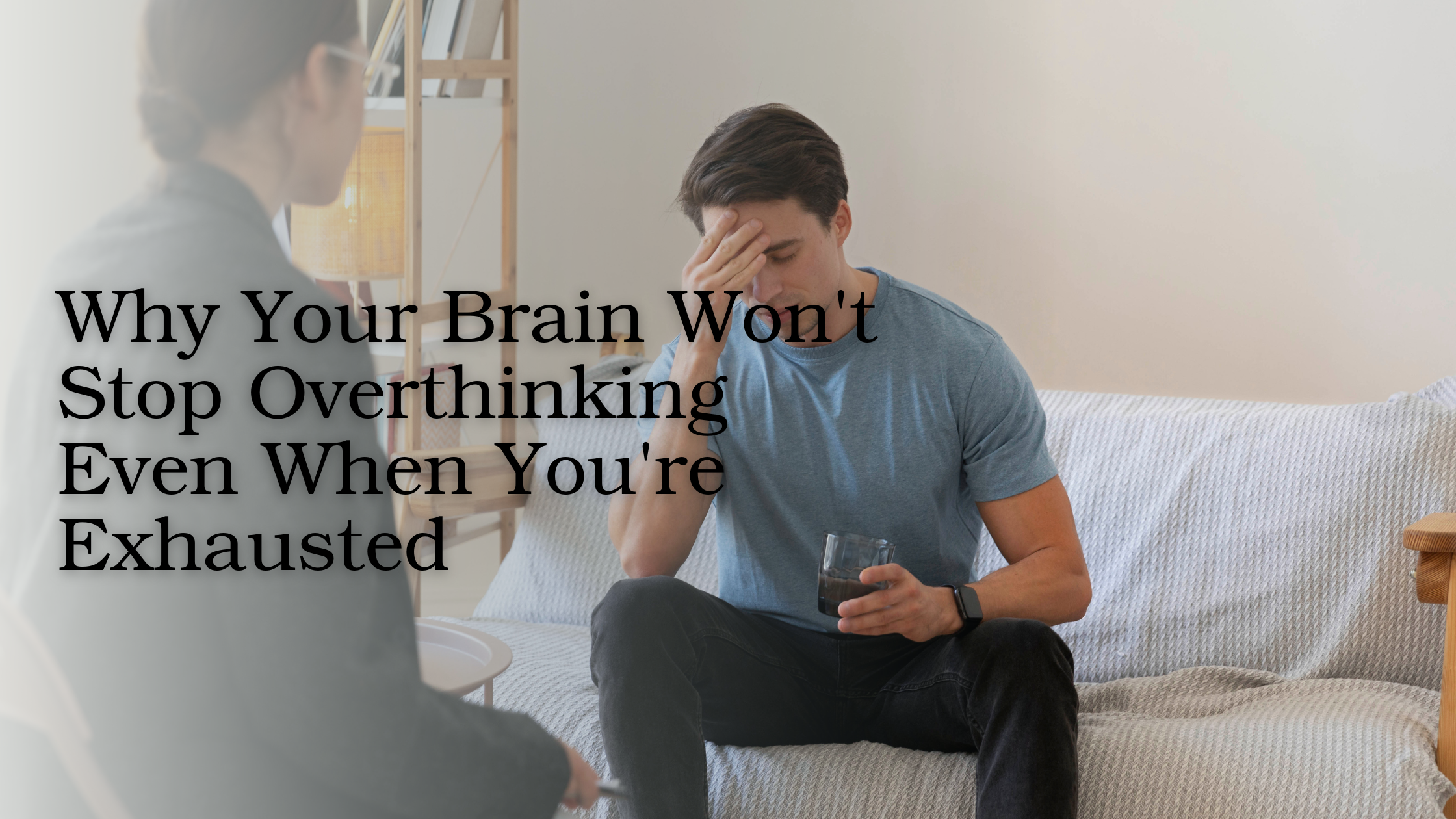
Have you ever felt so mentally exhausted that all you wanted was to rest, but your brain refused to slow down? Overthinking can leave you replaying conversations, worrying about the future, or imagining worst-case scenarios long after the moment has passed.
The good news is that these thought patterns can be changed. Dr. Christopher Joaquim helps adults understand what’s driving their overthinking and develop healthier ways to respond using evidence-based therapy.
This article explains why your brain gets stuck in cycles of overthinking, how it affects your daily life, and how therapy can help you develop healthier ways to respond.
What Is Overthinking?
Before understanding why your brain keeps overthinking, it helps to understand what overthinking is and how it differs from normal problem-solving.
Overthinking is the tendency to repeatedly analyze situations, worry about future outcomes, or replay past events without reaching a helpful conclusion. While reflecting on problems can sometimes be useful, overthinking often becomes repetitive and leaves you feeling mentally drained rather than more prepared.
Overthinking may sound like:
- “Did I say the wrong thing?”
- “What if something goes wrong tomorrow?”
- “I should have handled that differently.”
- “What if people are judging me?”
But why does your brain keep getting stuck in these thought patterns? Understanding the reasons behind overthinking is the first step toward breaking the cycle.
Why Your Brain Keeps Overthinking
Your brain isn’t trying to make your life harder. In many cases, it’s trying to protect you from uncertainty or potential danger. The problem is that this protective system can become overactive. The following are some of the most common reasons this happens:

Your Brain Is Trying to Prepare for Every Outcome
When you feel uncertain, your brain may believe that thinking through every possible scenario will prevent mistakes or disappointment.
This often leads to:
- Imagining worst-case scenarios.
- Replaying conversations repeatedly.
- Searching for certainty where none exists.
- Feeling mentally exhausted without finding answers.
For example: You send an email to your manager and don’t receive an immediate reply. Instead of assuming they’re busy, your mind jumps to thoughts like, “Did I say something wrong?” or “Am I in trouble?”
Anxiety Keeps Your Mind on High Alert
When anxiety is present, your brain becomes more sensitive to possible threats—even when you’re safe.
You may notice yourself:
- Constantly expecting something to go wrong.
- Overanalyzing everyday situations.
- Feeling unable to “turn your brain off.”
- Struggling to relax, even during quiet moments.
This is why overthinking often continues long after the stressful situation has passed.
Perfectionism Makes Every Decision Feel Bigger
If you place a lot of pressure on yourself to avoid mistakes, every decision can feel incredibly important.
You may find yourself:
- Double-checking your work repeatedly.
- Worrying about making the “wrong” choice.
- Delaying decisions because nothing feels good enough.
- Feeling disappointed with yourself despite doing well.
Overthinking can become your mind’s attempt to avoid failure, even though it rarely provides the certainty you’re looking for.
Unresolved Stress Can Keep Your Mind Busy
Sometimes your brain stays active because it hasn’t had the opportunity to fully process stress.
Some common sources of ongoing stress include:
- Work pressure.
- Relationship difficulties.
- Financial concerns.
- Health worries.
- Major life changes.
Even when you’re physically resting, your brain may continue trying to solve these unresolved concerns.
Signs That Overthinking Is Affecting Your Well-Being
Occasional worrying is normal. However, persistent overthinking can begin affecting multiple areas of your life.
You may notice:
- Difficulty falling or staying asleep.
- Feeling mentally exhausted.
- Trouble concentrating at work or school.
- Constant self-doubt.
- Avoiding decisions.
- Increased irritability.
- Feeling emotionally overwhelmed.
Many people try to deal with these thoughts by forcing themselves to stop thinking. Unfortunately, that approach usually doesn’t work.
Why Trying to “Stop Thinking” Usually Doesn’t Work
Many people respond to overthinking by telling themselves to simply stop worrying. Unfortunately, our brains don’t work that way.
Trying to suppress anxious thoughts often causes them to return even more frequently.
Instead of fighting your thoughts, it can be more helpful to:
- Notice when you’re overthinking.
- Recognize that thoughts aren’t always facts.
- Shift your attention back to the present moment.
- Respond with curiosity rather than fear.
Learning these skills often takes practice, but they can become easier over time.
How Individual Therapy Helps Break the Cycle of Overthinking
Therapy doesn’t focus on stopping your thoughts completely. Instead, it helps you understand why you overthink and teaches practical ways to respond differently.

Identify What’s Driving Your Thoughts
Rather than focusing only on the thoughts themselves, therapy explores why they keep appearing.
Together, you may explore:
- Common triggers.
- Underlying fears.
- Core beliefs.
- Situations that increase anxiety.
- Learn to Challenge Unhelpful Thinking
Many anxious thoughts feel convincing, even when they aren’t accurate.
Therapy helps you:
- Question worst-case assumptions.
- Look for evidence instead of fear.
- Develop more balanced perspectives.
- Respond more realistically to uncertainty.
Build Practical Coping Skills
You’ll also learn strategies that can be applied in everyday life, such as:
- Mindfulness techniques.
- Grounding exercises.
- Relaxation strategies.
- Healthier responses to stress.
- Managing uncertainty more effectively.
Together, these strategies help you respond to anxious thoughts with greater confidence and flexibility over time.
How Dr. Christopher Joaquim Helps People Manage Overthinking
Overthinking can leave you feeling mentally exhausted, but you don’t have to navigate it alone. Dr. Christopher Joaquim provides individualized therapy that helps clients understand the underlying causes of persistent worry and develop practical strategies for lasting change.
Through evidence-based approaches such as Cognitive Behavioral Therapy (CBT), Mindfulness, Strength-Based Therapy, and Solution-Focused Therapy, he helps clients:
- Understand the thought patterns that fuel anxiety.
- Reduce constant worry and mental overwhelm.
- Develop healthier coping strategies.
- Build greater confidence when facing uncertainty.
- Feel calmer and more present in everyday life.
Every treatment plan is tailored to each person’s experiences, concerns, and goals, helping clients apply these skills in everyday situations and create lasting changes beyond therapy sessions.
Small Steps You Can Take Today
Although therapy provides long-term support, there are also simple habits you can begin practicing today to help reduce overthinking.
Try to:
- Notice when you’re replaying the same thought repeatedly.
- Limit the amount of time you spend searching for certainty.
- Write down worries instead of carrying them mentally.
- Practice slow, intentional breathing when you feel overwhelmed.
- Focus on what you can control today instead of every possible outcome.
Small, consistent changes often create meaningful progress over time.
Final Thoughts
Overthinking can leave you feeling mentally exhausted, but it doesn’t have to control your life. By understanding what’s driving these thought patterns and learning healthier ways to respond, it’s possible to reduce anxiety, feel more present, and regain greater peace of mind.
If persistent overthinking is affecting your daily life, professional support can help you understand the patterns behind your thoughts and develop healthier ways to respond. Dr. Christopher Joaquim offers personalized therapy to help you reduce anxiety, manage overthinking, and feel more in control of your daily life.
If you’re looking for anxiety therapy in Salem, MA, or virtual therapy throughout Massachusetts, scheduling a consultation could be the first step toward a calmer, more balanced life.
Frequently Asked Questions
Is overthinking the same as anxiety?
Not always. Overthinking can happen on its own, but it is also a common symptom of anxiety disorders and chronic stress.
Why do I overthink more at night?
Distractions are usually fewer at night, making anxious thoughts more noticeable. Fatigue can also make worries feel more intense.
Can overthinking affect my physical health?
Yes. Chronic overthinking can contribute to poor sleep, muscle tension, headaches, fatigue, and increased stress.
Can therapy help if I’ve struggled with overthinking for a long time?
Yes. Many people experience significant improvement by learning healthier ways to respond to anxious thoughts rather than getting caught up in them.
How long does it take to stop overthinking?
Everyone’s experience is different. With consistent practice and the right support, many people gradually notice fewer intrusive thoughts and better emotional regulation.
Can therapy help stop overthinking?
The goal isn’t to eliminate every anxious thought but to reduce their intensity and help you respond in ways that don’t let them control your life.
Is overthinking a sign of weakness?
No. Overthinking is a common response to anxiety, stress, or uncertainty and is something many people experience.
When should I seek professional help for overthinking?
If overthinking is affecting your sleep, work, relationships, or daily functioning, speaking with a mental health professional can help you develop effective strategies to manage it.