
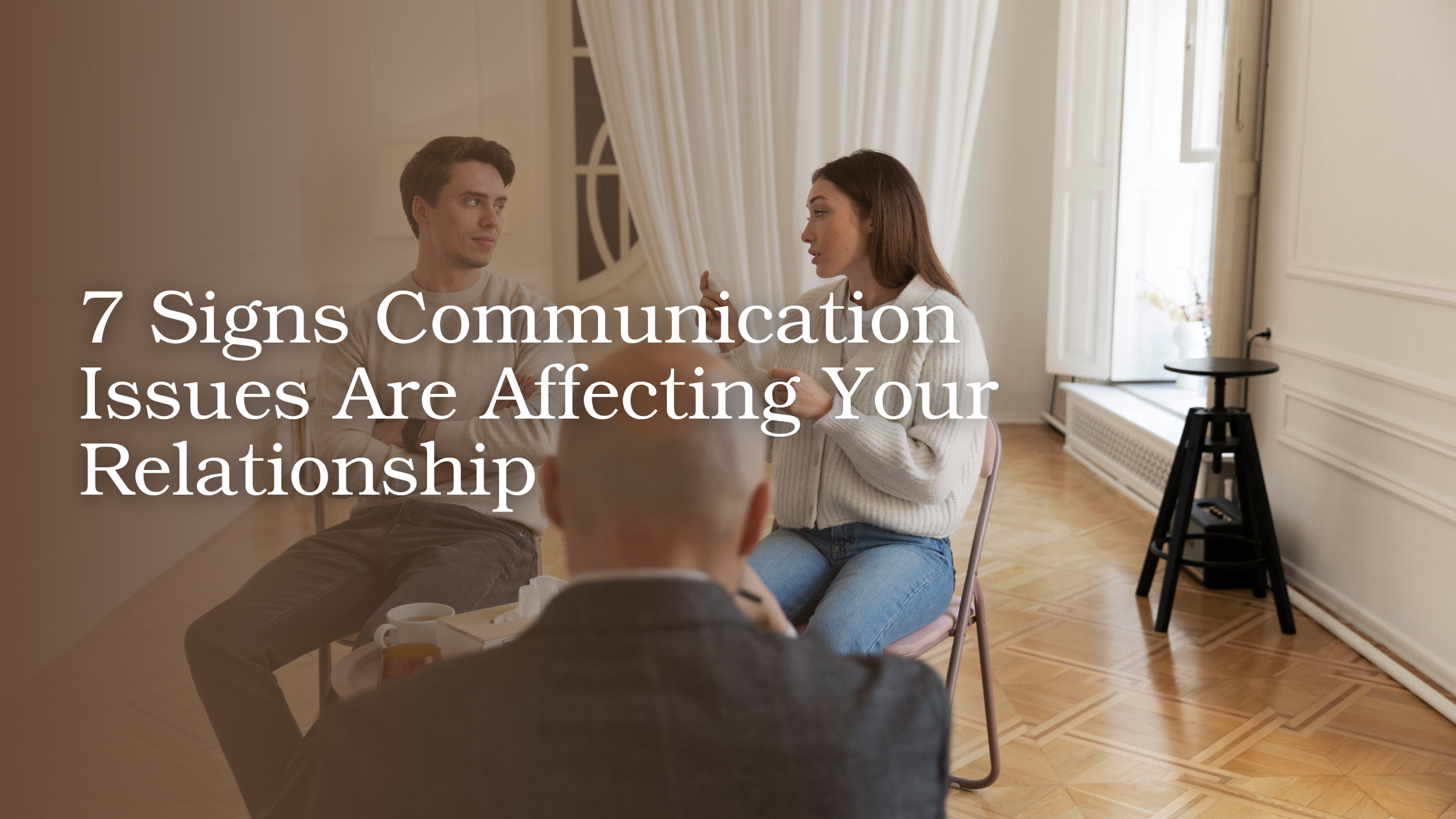
Have you ever walked away from a conversation with your partner wondering how such a small discussion turned into an argument? Or felt like you’re saying the same thing over and over, but somehow still aren’t understanding each other?
Communication problems rarely appear overnight. They start with small misunderstandings that, over time, can lead to frustration, emotional distance, and recurring conflict if left unaddressed.
The good news is that healthy communication isn’t something you’re simply born with it’s a skill that can be learned, practiced, and improved.
In this blog, you’ll discover seven signs that communication issues may be affecting your relationship, why these patterns develop, and practical steps you can take to reconnect and communicate more effectively.
7 Signs Communication Issues Are Affecting Your Relationship

1. You Keep Having the Same Arguments
If it feels like you’re having the same disagreement over and over again, the real issue may not be what’s being discussed, it may be how you’re communicating.
You might notice that:
- The conversation always ends without a solution.
- The same emotions come up every time.
- Both of you leave feeling unheard or frustrated.
For example: A discussion about household chores may actually be about feeling unsupported or unappreciated.
Recurring arguments are only one sign—sometimes communication breaks down in much quieter ways.
2. You Avoid Difficult Conversations
Not every communication Issues in a Relationship involves constant arguments. Sometimes, the problem is that important conversations never happen at all.
You may find yourselves:
- Keeping concerns to yourself to avoid conflict.
- Saying “It’s fine” when it isn’t.
- Changing the subject instead of discussing difficult issues.
For example: One partner feels hurt by a comment but chooses not to mention it. Over time, those unspoken feelings build into resentment.
3. You Don’t Feel Heard
Healthy communication is equally about expressing yourself and knowing your partner is listening.
Signs you don’t feel like your being heard are:
- Feeling interrupted before you’ve finished speaking.
- Having your concerns dismissed or minimised.
- Repeating yourself without feeling understood.
For example: You explain why you’re upset, but your partner immediately starts defending themselves instead of trying to understand your perspective.
When both partners feel unheard, even small disagreements can quickly become much bigger conflicts.
4. Small Issues Turn Into Bigger Arguments
When communication breaks down, even minor disagreements can quickly escalate.
You may notice that:
- Old arguments get brought into new conversations.
- One disagreement turns into several unrelated issues.
- Both of you become defensive instead of focusing on the current problem.
For example: A conversation about being late for dinner suddenly becomes an argument about past disappointments and unresolved frustrations.
Over time, these repeated conflicts can begin affecting your emotional connection as a couple.
5. You’re Growing Apart Emotionally
Communication Issues in a relationship often affect more than conversations—they can gradually change how connected you feel as a couple.
You might notice:
- Fewer meaningful conversations.
- Spending less quality time together.
- Less affection or emotional closeness.
- Feeling more like roommates than partners.
When emotional distance begins to grow, improving communication is often the first step toward rebuilding connection.
6. You’re Assuming Instead of Communicating
When communication starts breaking down, it’s easy to fill in the blanks with your own assumptions. The problem is that these assumptions are often based on fear or past experiences rather than what’s actually happening.
You might find yourself thinking:
- “They didn’t reply because they’re upset with me.”
- “They’re being quiet tonight, so I must have done something wrong.”
- “They didn’t ask about my day because they don’t care.”
For example:
When Daniel’s partner comes home tired and doesn’t talk much, he assumes she’s angry with him. Instead of asking if everything is okay, he becomes distant for the rest of the evening. Later, he learns she’d simply had a stressful day at work.
Assumptions can quickly turn small misunderstandings into bigger conflicts. Asking calm, open questions instead of jumping to conclusions gives your partner a chance to explain what’s really going on.
7. Every Disagreement Feels Like Someone Has to Win
In a healthy relationship, the goal is to solve the problem together. When communication breaks down, it can start to feel like one person has to win and the other has to lose.
You may notice conversations turning into:
- Trying to prove who’s right.
- Bringing up old arguments to support your point.
- Keeping score of who has made more mistakes.
- Focusing on winning the argument instead of understanding each other.
For example:
During a discussion about household chores, Sarah says she feels overwhelmed. Instead of talking about how they can share responsibilities, her partner starts listing everything he has done that week. Before long, they’re arguing about who does more instead of finding a solution together.
You may recognise one or two of these signs, or you may identify with several of them. Either way, becoming aware of these patterns is the first step toward changing them.
Once you understand where communication is breaking down, you can begin building healthier habits that bring you closer instead of pushing you further apart.
Let’s look at some practical ways to improve Communication Issues in a Relationship.
What You Can Do to Improve Communication
Healthy communication involves making small, consistent changes that help both partners feel understood and respected.
Communication Issues in a Relationship doesn’t improve because one big conversation fixes everything. It usually gets better through small, everyday changes. If you recognise some of the signs in this blog, these strategies can help you start rebuilding healthier communication.

Pause Before Reacting
When you’re upset, your first reaction isn’t always your best one. You might say something you don’t mean or stop listening because you’re focused on defending yourself.
If you feel yourself getting angry:
- Take a few deep breaths before replying.
- Let your partner know you need a short break if emotions are running high.
- Come back to the conversation when you’ve both had time to calm down.
For example:
Instead of arguing for another hour, you could say, “I’m feeling too frustrated to talk properly right now. Can we come back to this after dinner?”
Taking a short break isn’t avoiding the problem. It gives both of you a better chance of having a productive conversation.
Talk About Problems While They’re Still Small
Many people avoid difficult conversations because they don’t want to start an argument. The problem is that small frustrations often grow into much bigger ones when they’re left unspoken.
Instead, try to:
- Bring up concerns within a day or two.
- Choose a time when you’re both relaxed.
- Focus on one issue instead of listing everything that’s ever gone wrong.
For example:
If you’re upset that your partner keeps cancelling plans, it’s usually more helpful to talk about it after the second or third time instead of waiting until you’re so frustrated that everything comes out at once.
The sooner you talk about what’s bothering you, the easier it is to solve the problem before it grows into something bigger.
Make Time to Check In With Each Other
Life gets busy, and it’s easy to spend all your time talking about work, bills, or who’s picking up groceries. Before you know it, you’ve stopped asking each other how you’re actually feeling.
Even a 10-minute conversation once or twice a week can make a difference.
You could ask:
- “How have you been feeling this week?”
- “Is there anything you’ve been stressed about lately?”
- “Is there anything I can do to support you better?”
These small check-ins help you stay connected before problems become bigger.
Ask Questions Instead of Guessing
When communication isn’t going well, it’s easy to assume you know what your partner is thinking. The trouble is that we’re often wrong.
Instead of jumping to conclusions, get curious.
For example:
Your partner has been quiet all evening. Rather than thinking, “They’re annoyed with me,” try asking, “You seem a bit quieter than usual today. Is everything okay?”
A simple question can clear up a misunderstanding before it turns into an argument.
Remember That You’re on the Same Team
During disagreements, it’s easy to get caught up in proving your point or trying to show why you’re right. But healthy relationships aren’t about winning arguments. They’re about finding solutions that work for both people.
When you’re discussing a problem, try asking:
- “How can we fix this together?”
- “What would make this feel better for both of us?”
- “What can we each do differently next time?”
Changing the conversation from “Who’s right?” to “How do we solve this together?” helps you work as partners instead of opponents. Even if you don’t agree on everything, you’ll be much more likely to understand each other and find a solution you can both live with.
While many couples can improve communication on their own, recurring misunderstandings or unresolved conflict may benefit from professional support.
How Dr. Christopher Joaquim Can Help You Communicate Better
Communication problems are rarely about a single disagreement. More often, they’re the result of patterns that have developed over time. Dr. Christopher Joaquim helps couples recognise these patterns and develop healthier ways of connecting, so conversations become more productive instead of repetitive.
Through couples therapy, he helps you:
- Understand the root of recurring conflict instead of focusing only on the surface issue.
- Communicate more openly and effectively without blame, criticism, or defensiveness.
- Navigate difficult conversations about topics like trust, parenting, finances, or intimacy in a safe, supportive environment.
- Build practical communication skills that you can use long after couples therapy sessions end.
His goal is to help you create a relationship where both partners feel heard, understood, and better equipped to face challenges together.
Final Thoughts
Strong communication isn’t about avoiding disagreements—it’s about learning how to navigate them with understanding, respect, and teamwork. Small changes in the way you listen, respond, and express your needs can have a lasting impact on your relationship.
If you’re looking for couples therapy in Salem, MA, Dr. Christopher Joaquim provides personalized, evidence-based support to help couples improve communication, resolve recurring conflicts, and rebuild emotional connection. Schedule a consultation today to take the first step toward healthier conversations and a stronger, more connected relationship.
Frequently Asked Questions
Yes, some couples improve by making intentional changes and practicing healthier communication habits. However, if the same issues continue despite your efforts, professional guidance can help uncover deeper patterns.
Choose a calm time to talk, focus on how you feel rather than blaming your partner, and approach the conversation with the goal of understanding each other instead of proving a point.
Not necessarily. Many healthy relationships experience communication challenges. What matters most is whether both partners are willing to work on improving them.
Yes. When partners feel misunderstood, criticised, or emotionally disconnected, it can become more difficult to maintain closeness and physical intimacy.
Every couple is different. Some notice positive changes within a few weeks of making consistent efforts, while deeper communication patterns may take longer to change.
Start by sharing specific examples of how communication has affected you rather than accusing them of doing something wrong. This often leads to a more productive conversation.
Couples therapy is generally most effective when both partners participate, but individual therapy can also help you develop healthier communication skills and relationship patterns.
Look for a therapist with experience in relationship counselling who uses evidence-based approaches and creates a supportive environment for both partners. Dr. Christopher Joaquim offers couples therapy in Salem, MA, as well as virtual sessions for couples across Massachusetts.