
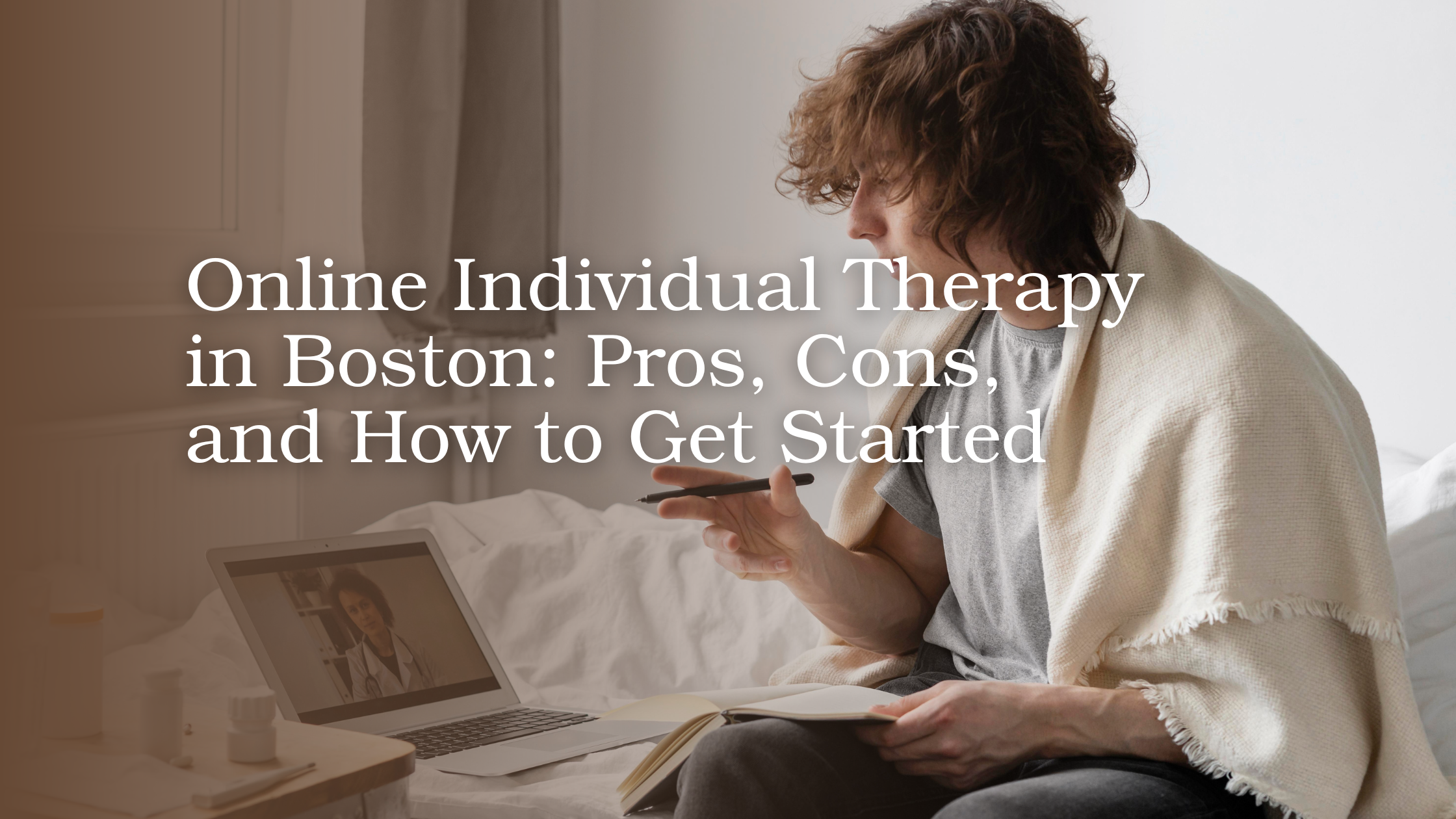
Finding time for therapy isn’t always easy. Between work, family responsibilities, traffic, and busy schedules, getting to an office every week can feel like another source of stress. If you’ve been wondering whether online individual therapy in boston a good alternative, you’re not alone.
Taking the first step can feel overwhelming, especially if you’re wondering whether online therapy is as effective as meeting a therapist in person.
For many people, online individual therapy in Boston offers a convenient, flexible, and effective way to improve their mental health. Whether you’re managing anxiety, depression, stress, burnout, relationship challenges, or major life transitions, virtual therapy allows you to receive professional support without traveling to an office.
If you’re considering online individual therapy in Boston, understanding its benefits, limitations, and what to expect can help you make an informed decision.
What Is Online Individual Therapy?
Online individual therapy (also called teletherapy or virtual therapy) allows you to meet with a licensed therapist through a secure video platform. Sessions are similar to in-person therapy, except they’re conducted remotely from a location where you feel comfortable and have privacy.
The goal of online therapy is the same as in-person therapy: helping you better understand your thoughts, emotions, and behaviors while developing healthier ways to manage life’s challenges.
People seek online therapy for many different reasons, including:
- Anxiety and chronic stress.
- Depression.
- Work burnout.
- Relationship difficulties.
- Grief and loss.
- Trauma recovery.
- Low self-esteem.
- Life transitions.
With more than 21 years of experience, Dr. Christopher Joaquim provides online individual therapy in Boston for adults throughout Massachusetts, California, and Florida. Using evidence-based approaches such as Cognitive Behavioral Therapy (CBT), Mindfulness, Strength-Based Therapy, and Solution-Focused Therapy, he helps clients develop practical skills to improve emotional well-being and navigate life’s challenges.
For adults seeking online individual therapy in Boston, Dr. Christopher Joaquim provides compassionate, personalized care through secure virtual sessions designed to fit busy schedules.
The Pros of Online Individual Therapy
Virtual therapy has become increasingly popular because it offers many practical advantages while maintaining the quality of care many clients need.

It Makes Therapy More Convenient
One of the biggest advantages is convenience.
Instead of commuting across the city, you can attend therapy from home, your office, or another private location.
This can be especially helpful if you:
- Have a busy work schedule.
- Have childcare responsibilities.
- Travel frequently.
- Have limited transportation.
- Prefer avoiding traffic or long commutes.
Saving travel time often makes it easier to stay consistent with therapy. For people living in Boston and nearby communities, online therapy also removes the stress of commuting and makes it easier to fit appointments into a busy day.
It Gives You More Flexibility
Online appointments are often easier to fit into your routine.
For example, you may be able to:
- Schedule sessions during your lunch break.
- Attend therapy before or after work.
- Continue therapy while traveling.
- Maintain regular appointments despite a changing schedule.
Greater flexibility often leads to better long-term consistency.
It Can Feel More Comfortable
Many people feel less anxious speaking from their own home than sitting in an unfamiliar office.
Being in a familiar environment may help you:
- Feel more relaxed.
- Open up more easily.
- Reduce anxiety before sessions.
- Focus more on the conversation.
Feeling comfortable can make it easier to discuss difficult emotions.
It Improves Access to Specialized Care
Finding the right therapist isn’t always easy if you’re limited to providers nearby. Online therapy gives you access to therapists whose experience matches your specific needs, allowing you to focus on finding the right fit rather than simply the closest location.
Some of the benefits include:
- More choices. You can connect with therapists who specialize in concerns such as anxiety, depression, trauma, or relationship challenges.
- A better therapeutic fit. Online therapy gives you a wider range of professionals, making it easier to find someone whose approach feels right for you.
- Less travel, more accessibility. You can receive specialized care without spending extra time commuting to appointments.
For many adults, these advantages make online therapy easier to begin and easier to continue consistently over time. While online therapy offers many advantages, it’s also important to understand where it may not be the best fit.
The Cons of Online Individual Therapy
While online therapy works well for many people, it isn’t the best fit for every situation.
Understanding its limitations can help you decide whether it’s right for you.

You Need a Private Space
Confidentiality is important during therapy.
If your home is noisy or you don’t have a private room, it may be difficult to speak openly.
Many people solve this by:
- Scheduling sessions when others aren’t home.
- Using headphones.
- Sitting in a private office or quiet room.
- Choosing a location where interruptions are unlikely.
- Technology Can Occasionally Cause Interruptions
Internet issues or technical problems sometimes happen.
These may include:
- Poor internet connection.
- Frozen video.
- Audio delays.
- Difficulty logging into the session.
Fortunately, these issues are usually temporary and can often be resolved quickly.
Some People Prefer Face-to-Face Interaction
Although research shows online therapy is effective for many mental health concerns, some people simply prefer meeting in person.
They may feel more comfortable with:
- Sitting in the same room as their therapist.
- Fewer technology-related distractions.
- Traditional office visits.
For many people, these challenges are manageable, and discussing them during an initial consultation can help determine whether online therapy is the right fit.
How to Get Started With Online Therapy
Beginning therapy is often simpler than people expect.
Step 1: Decide What You Want Help With
Think about what has been affecting your well-being.
You might be looking for support with:
- Anxiety.
- Depression.
- Stress or burnout.
- Relationship concerns.
- Trauma.
- Major life changes.
- Self-confidence.
Having a general idea of your goals helps guide the therapy process.
Step 2: Choose a Therapist Who Fits Your Needs
Finding the right therapist is one of the most important parts of the process.
Look for someone who:
- Has experience treating your concerns.
- Uses evidence-based therapy approaches.
- Makes you feel comfortable and respected.
- Encourages collaboration rather than judgment.
Feeling safe and understood is essential for meaningful progress.
Step 3: Prepare Your Space
Before your appointment:
- Choose a quiet, private room.
- Test your internet connection.
- Use headphones if possible.
- Silence notifications.
- Keep water and a notebook nearby if helpful.
Creating a distraction-free environment allows you to focus fully on your session.
Step 4: Attend Your First Session With an Open Mind
Your first session is mainly about understanding your concerns and goals.
Your therapist will likely ask about:
- Your current challenges.
- Your mental health history.
- What’s been affecting your daily life.
- What you’d like to achieve through therapy.
There is no pressure to share everything during your first session.
What Progress in Online Therapy Can Look Like
Progress in therapy doesn’t always happen through dramatic breakthroughs. More often, it comes from small, consistent changes that gradually improve how you think, feel, and respond to everyday challenges.
While everyone’s journey is different, many people begin to notice meaningful improvements as they continue attending sessions and practicing the skills they learn.
Everyone’s experience is different, but over time many clients begin noticing changes like these:
- Feeling calmer during stressful situations. Instead of becoming overwhelmed immediately, you may find it easier to pause, think clearly, and respond more thoughtfully.
- Managing anxious or negative thoughts more effectively. You may spend less time overthinking, catastrophizing, or criticizing yourself and become better at challenging unhelpful thought patterns.
- Communicating with greater confidence. Whether at work, with family, or in relationships, you may feel more comfortable expressing your thoughts, setting expectations, and having difficult conversations.
- Setting healthier boundaries. You may become more confident saying “no,” prioritizing your own well-being, and recognizing when your emotional needs deserve attention.
- Sleeping better and feeling more rested. As stress and anxiety become more manageable, many people notice improvements in their sleep quality and overall energy levels.
- Feeling more emotionally balanced. Instead of reacting impulsively to setbacks, you may recover more quickly from difficult emotions and feel better equipped to handle life’s ups and downs.
- Handling challenges with greater confidence. Problems that once felt overwhelming may begin to feel more manageable as you develop healthier coping strategies and greater self-confidence.
- Feeling more like yourself again. Many people notice they’re able to enjoy activities, connect more easily with others, and focus on the things that matter most instead of feeling consumed by stress or worry.
Progress isn’t about eliminating every difficult emotion or never feeling stressed again. It’s about developing the skills and confidence to navigate life’s challenges in healthier, more balanced ways. Over time, these small improvements often lead to meaningful, lasting changes in your overall well-being.
How Dr. Christopher Joaquim Helps Through Online Individual Therapy
Every person’s experiences and goals are different, which is why therapy should be personalized rather than one-size-fits-all.
Rather than using the same approach for everyone, Dr. Christopher Joaquim tailors therapy to each person’s goals, experiences, and challenges. Through online therapy, Dr. Christopher Joaquim helps clients:
- Better understand their thoughts, emotions, and behaviors.
- Develop healthier coping strategies.
- Reduce anxiety and stress.
- Improve emotional resilience.
- Navigate life transitions with greater confidence.
- Build practical skills that support long-term mental well-being.
His collaborative, evidence-based approach focuses on helping clients create lasting, meaningful change at a pace that feels comfortable for them. Online appointments are available for adults throughout Massachusetts, California, and Florida, making it easier to receive personalized support wherever you are.
Final Thoughts
Starting therapy doesn’t require having everything figured out. What matters most is taking the first step toward getting support. Online individual therapy offers a flexible and effective way to begin working toward better emotional well-being from a place where you feel comfortable.
If you’re looking for online individual therapy in Boston, or virtual therapy anywhere in Massachusetts, California, or Florida, Dr. Christopher Joaquim offers compassionate, evidence-based care tailored to your unique needs. Schedule a consultation today and take the first step toward better mental health.
Frequently Asked Questions
For many concerns, including anxiety, depression, stress, and relationship issues, research shows that online therapy can be just as effective as in-person therapy when provided by a qualified therapist.
Online therapy is a good option for adults who have access to a private space, a reliable internet connection, and are comfortable communicating through video sessions.
The first session focuses on understanding your concerns, discussing your goals, and learning about your background so your therapist can develop a personalized treatment plan.
No. Most people only need a computer, tablet, or smartphone with a camera, microphone, and a stable internet connection.
Yes. Licensed therapists use secure, HIPAA-compliant platforms to protect your privacy and keep your personal information confidential.
Many people begin with weekly sessions, although the frequency depends on your goals, symptoms, and progress over time.
Yes. Online therapy is commonly used to treat anxiety, depression, stress, burnout, trauma, and many other mental health concerns using evidence-based approaches.
Feeling nervous is completely normal. Your therapist will guide the conversation at a pace that feels comfortable, and there’s no expectation to share everything during your first session.
The length of therapy varies from person to person. Some people attend for a few months to work on a specific concern, while others continue longer for ongoing personal growth and support.
If you’re looking for flexible, convenient access to professional mental health support and have a private place to attend sessions, online therapy may be an excellent option. A consultation can help you decide whether it’s the best fit for your needs.