
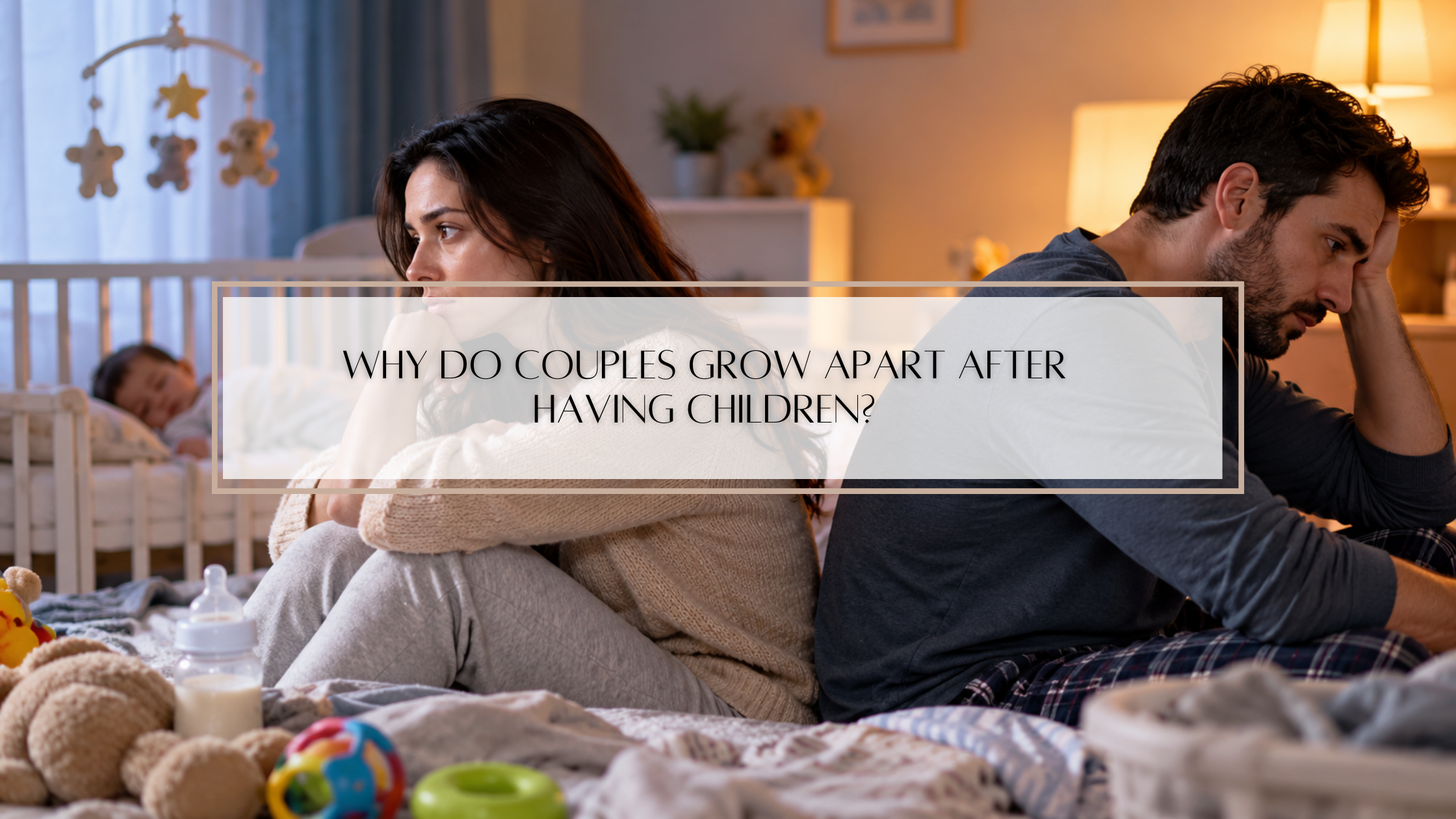
Having a child can bring enormous joy, but it can also change a relationship in ways couples don’t always expect. Conversations that once lasted hours may become quick discussions about school, meals, and household chores. Time for dates, affection, and meaningful conversations may become harder to find.
Couples often grow apart after having children because parenting demands their time, energy, and attention, leaving less room for their relationship. Unequal responsibilities, exhaustion, financial stress, and changing identities can add to the distance.
Understanding why this happens can help you recognise when your relationship needs attention. This article explores the common causes, signs of growing apart, and practical ways to reconnect while raising children together.
Why Parenthood Can Change Your Romantic Relationship
Before having children, couples often have more freedom to prioritise each other. They can plan spontaneous outings, spend quiet evenings together, or talk about their day without frequent interruptions.
Parenthood changes that routine. Caring for a child introduces new responsibilities, unpredictable schedules, and decisions that affect the entire family.
For example, an evening that once involved cooking together and watching a film may now involve feeding a baby, settling them to sleep, and preparing for the next morning.
Several changes can affect the relationship:
- Less uninterrupted time: Conversations and activities are frequently interrupted by children’s needs.
- New priorities: Decisions about childcare, education, health, and finances become central to everyday life.
- Changing identities: Both partners must adjust to becoming parents while maintaining their individual identities and romantic relationship.
- Reduced spontaneity: Even simple activities may require planning around childcare, sleep schedules, and family commitments.
These changes are common, but they can become difficult when couples struggle to adjust their expectations of each other.
As family life becomes more demanding, the way couples divide their time and responsibilities can create another source of distance.
Everyday Pressures That Slowly Create Emotional Distance
Growing apart rarely happens overnight. It often develops through small changes that continue for months or years without being addressed.
A couple may still live together, raise their children successfully, and care deeply about each other while gradually losing their sense of partnership.
Common pressures include:
- Unequal parenting responsibilities: One partner may handle most night wakings, school arrangements, appointments, and daily childcare, leading to frustration and resentment.
- Physical and emotional exhaustion: When both partners are tired, they may have little energy left for conversation, affection, or resolving disagreements.
- Financial pressure: Childcare expenses, housing costs, and concerns about providing for the family can increase stress.
- Limited personal time: Parents may struggle to maintain friendships, hobbies, exercise, or other activities that help them feel like themselves.
- Different parenting expectations: Partners may disagree about discipline, screen time, routines, or how much independence children should have.
Consider a couple who both work full-time. One parent regularly manages school drop-offs, meal planning, and appointments, while the other believes they contribute equally because they handle some weekend chores.
Over time, the first partner may feel unsupported, while the second feels criticised despite their efforts. Neither may realise how differently they experience their shared workload.
These pressures become harder to manage when couples stop communicating about their needs and begin interacting mainly as co-parents.
For additional insight into how relationship tension develops, read Dr. Christopher Joaquim’s article on 7 Ways to Rebuild Trust After a Fight.

How Parenting Can Change Communication and Conflict
After having children, many couples find that most of their conversations become practical rather than personal.
They discuss who will collect the children, what groceries are needed, or how to manage the next school holiday. Important relationship conversations get postponed because there never seems to be a convenient time.
This can affect communication in several ways:
- Conversations become task-focused: Partners exchange information about family responsibilities but rarely discuss their own feelings or experiences.
- Small disagreements escalate: Exhaustion makes it harder to respond patiently to everyday frustrations.
- Concerns remain unresolved: Couples avoid difficult discussions because they fear adding more stress to an already demanding routine.
- Appreciation decreases: Each partner may notice what the other hasn’t done rather than recognising the effort they contribute.
For example, one parent might say, “You never help me with anything,” after a difficult evening. The other responds defensively, listing everything they did that day.
The original concern, perhaps feeling overwhelmed and needing more support, gets lost in an argument about who works harder.
A more productive conversation would focus on the specific problem: “I’m struggling to manage bedtime and the kitchen on my own. Can we divide those tasks differently?”
When practical conversations replace emotional connection, couples may also notice changes in their physical affection and intimacy.
For more practical advice, read 9 Best Practices to Be a Better Listener in Your Relationship.
Why Intimacy Often Takes a Back Seat
Having children can change how couples experience physical and emotional intimacy. Exhaustion, limited privacy, changes in body image, medical recovery after childbirth, and the demands of caring for young children can all affect sexual desire and affection.
One partner may want more closeness, while the other feels too tired or mentally occupied to respond. If neither understands the other’s experience, both may feel rejected or misunderstood.
Intimacy can become difficult when:
- Affection is always postponed: Hugs, kisses, and quiet moments together become less frequent because there is always something else to do.
- Sex becomes another expectation: One partner may feel pressured to resume sexual activity or maintain a previous level of desire.
- Rejection is interpreted personally: A partner who declines sex may be seen as no longer attracted to the other person.
- Emotional closeness declines: Without regular conversations and shared experiences, physical affection may begin to feel less natural.
For example, one partner might interpret a lack of sexual interest as a sign that the relationship is failing. The other may still feel deeply committed but have little energy or desire because of stress, sleep deprivation, or physical changes.
Different levels of desire do not automatically mean a couple has stopped loving each other. Intimacy often needs to be renegotiated as family circumstances change, with both partners’ comfort and consent respected.
Changes in intimacy can be difficult to discuss, so it helps to recognise the broader signs that your relationship may need attention.
Signs You May Be Growing Apart as Parents
Growing apart does not necessarily mean a relationship is ending. However, certain patterns can indicate that the romantic partnership is receiving too little attention.
Look for changes such as:
- You feel more like co-workers: Most conversations involve managing the household or children, with little interest in each other’s personal lives.
- You rarely spend time alone together: You cannot remember the last time you enjoyed an activity as a couple without discussing parenting responsibilities.
- You feel emotionally disconnected: You no longer turn to each other for comfort, encouragement, or support in the same way.
- Resentment is building: One or both partners feel their contributions are overlooked or their needs are consistently ignored.
- You avoid meaningful conversations: You keep difficult feelings to yourself because discussing them seems too exhausting or likely to cause conflict.
- You make fewer shared plans: Conversations about the future focus on the children’s needs rather than experiences you want to share as a couple.
A useful question to ask yourself is: If we weren’t discussing the children or household responsibilities, what would we talk about?
If it is difficult to think of an answer, it may be time to create more opportunities to reconnect.
Recognising these signs is not about assigning blame. It is about identifying what has changed so you can decide what needs to change next.
How Couples Can Rebuild Connection After Children
Reconnecting does not require elaborate dates, expensive holidays, or hours of uninterrupted time. Small, consistent changes can help couples feel more like partners again.
Rebuilding connection takes effort from both partners, even when their experiences, emotional needs, and expectations differ. By listening to each other and making room for both perspectives, couples can begin finding practical ways to reconnect.
1. Make Time for Conversations Beyond Parenting
Set aside a few minutes each day to talk about something unrelated to the children or household tasks. A simple 10-minute daily check-in after the children go to bed can help you reconnect without adding another major commitment to your routine.
You might ask:
- What was the best part of your day?
- Is anything worrying you at the moment?
- What have you been looking forward to lately?
- Is there anything you need more support with?
Take turns sharing and listening without immediately offering advice or turning the conversation into a discussion about chores. Making this a regular habit can help you stay connected to each other as partners, not just as parents.
2. Divide Parenting Responsibilities More Fairly
If one partner feels overwhelmed, vague promises to help more may not be enough. Discuss the specific tasks each person handles and agree on a more workable division.
For example, one partner might manage school preparation while the other handles dinner and bedtime on certain evenings.
Review the arrangement as your children’s needs change. Fairness does not always mean dividing every task equally, but both partners should feel their contributions and limitations are considered.
3. Reintroduce Small Moments of Affection
Physical and emotional closeness can return gradually through everyday gestures.
Try:
- Greeting each other warmly at the end of the day.
- Sharing a hug before starting household tasks.
- Sitting together for a few minutes after the children go to bed.
- Sending a thoughtful message during the day.
- Expressing appreciation for something your partner has done.
These gestures are not substitutes for addressing serious relationship problems. They help create regular opportunities for warmth and connection.
4. Plan Realistic Time Together as a Couple
Waiting for life to become less busy can mean waiting indefinitely. Instead, choose activities that fit your current circumstances.
You could have breakfast together before the children wake up, take a short walk, or arrange a date when childcare is available.
The activity matters less than the opportunity to enjoy each other’s company without constantly managing family responsibilities.
5. Discuss Problems Before Resentment Builds
If something is bothering you, try to raise it before frustration turns into repeated arguments.
Describe the situation, explain how it affects you, and suggest a specific change. For example, “I feel overwhelmed when I handle every weekend activity. Could we alternate planning them?”
Give your partner an opportunity to explain their perspective, too. The goal is to solve the problem together rather than establish who is the better parent.
These changes can help couples reconnect, but persistent conflict or emotional withdrawal may require more support than everyday adjustments can provide.
When Parenting Strain Needs Professional Relationship Support
Sometimes, couples try to reconnect but continue falling into the same arguments or withdrawing from each other. This may happen when resentment has accumulated, trust has been damaged, or deeper relationship concerns remain unresolved.
Professional support may be helpful when:
- Arguments repeatedly return to the same unresolved issues.
- One partner feels chronically unsupported or unappreciated.
- Emotional or physical intimacy has declined and conversations about it lead to conflict.
- One or both partners feel lonely despite living together.
- Attempts to improve communication have not led to meaningful change.
Couples therapy can provide a structured setting to explore these difficulties, understand each partner’s perspective, and develop practical ways to address recurring problems.
Seeking support does not mean you have failed as a couple. It can be a way to address problems before they become more entrenched.
For further reading on managing family-related stress, the American Psychological Association’s guide to parental stress and burnout offers additional information about the pressures parents may experience.
For couples who need help moving beyond recurring conflict, working with a therapist can create space to examine their relationship alongside the demands of parenting.
How Dr. Christopher Joaquim Helps Couples Reconnect After Parenthood
Dr. Christopher Joaquim has over 21 years of clinical experience and uses therapeutic approaches including Cognitive Behavioral Therapy (CBT), Mindfulness, Strength-Based Therapy, and Solution-Focused Therapy.
When parenting pressures affect a couple’s relationship, therapy can focus on the specific difficulties that have developed rather than assuming every couple needs the same solution.
Depending on their circumstances, the work may involve:
- Addressing recurring conflict: Identifying the patterns that turn discussions about chores, childcare, or family decisions into arguments.
- Examining unhelpful assumptions: Exploring beliefs such as “I have to handle everything myself” or “My partner should already know what I need.”
- Improving communication: Helping partners explain their concerns clearly and listen without immediately becoming defensive.
- Finding practical agreements: Working towards realistic arrangements for parenting responsibilities, shared time, and individual needs.
- Rebuilding partnership: Identifying ways to restore appreciation, cooperation, and emotional connection within the demands of family life.
The approach is tailored to each couple’s concerns and goals.
If parenting has left you and your partner feeling more like co-parents than romantic partners, explore Dr. Christopher Joaquim’s couples therapy to learn more about the available support.
Final Thoughts
Having children changes a couple’s daily life, but it doesn’t mean the romantic relationship must disappear beneath parenting responsibilities. Distance often develops when exhaustion, unequal workloads, and unresolved frustrations leave little room for connection.
Share responsibilities more thoughtfully, talk about concerns before resentment grows, and protect small moments that remind you why you chose each other.
If you and your partner feel disconnected despite trying to reconnect, Dr. Christopher Joaquim’s couples therapy services can help you address recurring conflict, improve communication, and work towards a stronger partnership while raising your children.
Frequently Asked Questions About Relationships After Having Children
Is it normal to feel less connected to your partner after having a baby?
Yes. Sleep deprivation, changing routines, and increased responsibilities can temporarily reduce emotional and physical closeness. However, persistent disconnection or resentment deserves attention rather than being dismissed as an inevitable part of parenthood.
How long does it take couples to adjust after having children?
There is no fixed timeline. Adjustment depends on sleep, childcare demands, available support, financial pressures, and each partner’s circumstances. Some couples settle into new routines quickly, while others need more time and support.
Can having a child save a struggling relationship?
A child does not automatically resolve existing relationship problems. Parenting can introduce additional stress and responsibilities, making unresolved conflict more difficult to manage. Couples usually benefit from addressing relationship concerns directly rather than expecting parenthood to repair them.
Why do I feel lonely even when we live together?
You may share a home and parenting responsibilities without feeling emotionally connected. If conversations rarely move beyond practical tasks or you no longer feel understood, the relationship may need more intentional communication and shared time.
What if one parent does more childcare than the other?
Start by discussing the actual responsibilities each person handles, including planning and mental workload. Agree on specific changes rather than general promises, and revisit the arrangement as family demands and work schedules change.
Can couples regain intimacy after years of parenting stress?
Yes. Couples can rebuild intimacy by addressing unresolved tension, discussing changing needs, and making room for affection without pressure. Progress may be gradual, particularly when exhaustion, health concerns, or long-standing resentment are involved.
Should couples stay together solely for their children?
Children benefit from stable, supportive caregiving, but staying together at any cost is not always best. Consider the relationship’s emotional climate, safety, and capacity for change. Professional support can help clarify options when conflict persists.
When should we consider couples therapy after having children?
Consider therapy when recurring arguments, resentment, emotional distance, or intimacy concerns persist despite attempts to improve things. Early support can help couples address patterns before they become more entrenched and difficult to change.