
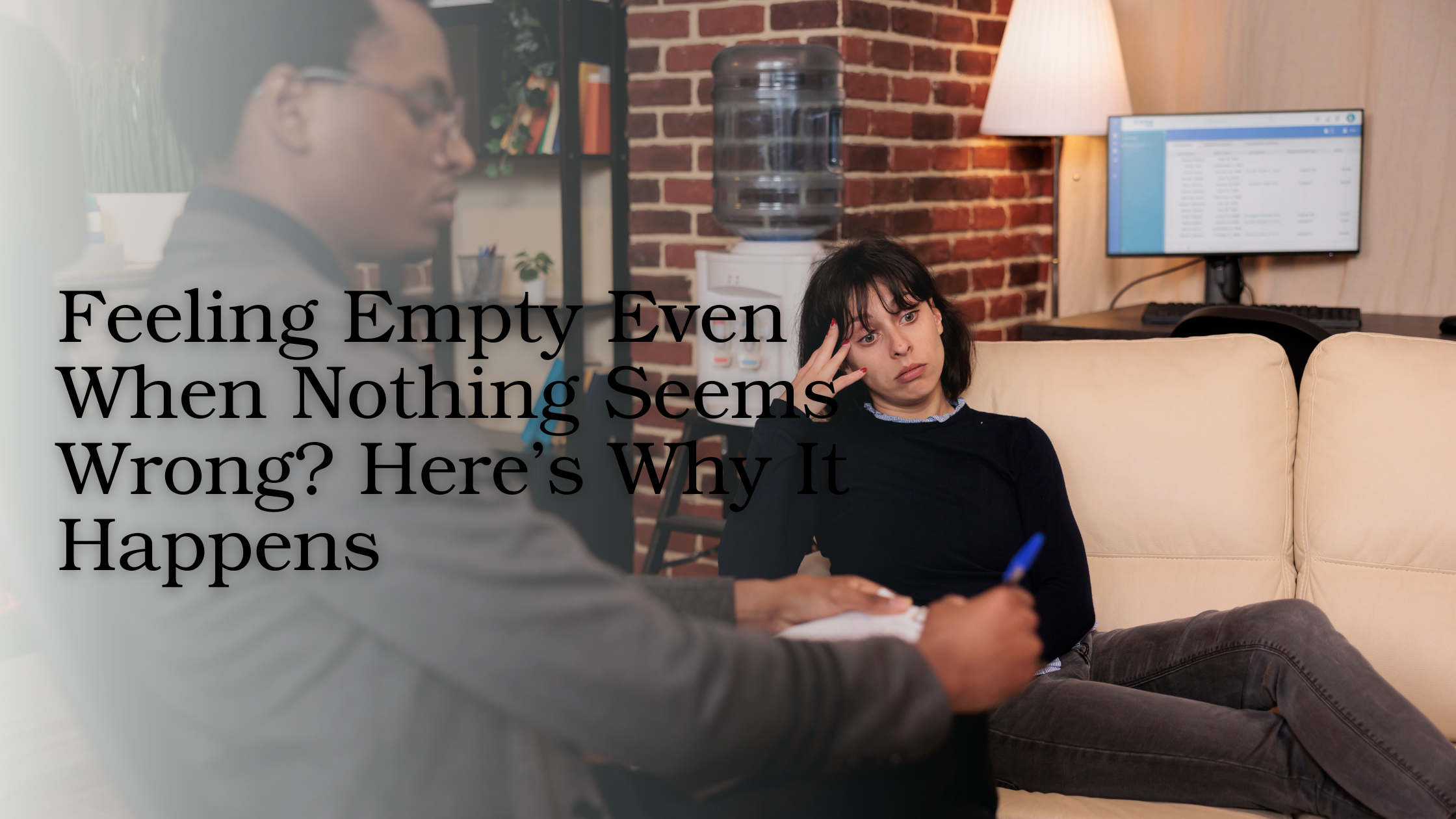
You have a job, responsibilities, people who care about you, and from the outside, life seems perfectly fine. Yet something still feels off. You feel emotionally numb, and you can’t explain why.
Feeling empty can be confusing, especially when there’s no obvious reason for it. Dr. Christopher Joaquim helps adults explore the underlying causes of these emotions and develop healthier ways to reconnect with themselves.
This article explains why you may feel empty even when life seems fine, what these feelings could be telling you, and how therapy can help you reconnect with yourself.
What Does It Mean to Feel Empty?
Feeling empty isn’t simply feeling sad or having a bad day. Many people describe it as feeling emotionally disconnected from themselves, their relationships, or the things they once enjoyed.
You might experience:
- Going through your daily routine on autopilot.
- Feeling emotionally numb or detached.
- Losing interest in hobbies or activities.
- Feeling like something is missing, even if life seems “fine.”
- Struggling to find excitement or purpose.
These feelings can come and go, or they may gradually become more persistent over time. Understanding why this happens can make it easier to take the next step toward feeling better.
Why You Might Feel Empty Even When Nothing Seems Wrong
Feeling emotionally empty is rarely caused by a single issue. In many cases, it’s the result of several emotional, psychological, or life-related factors building up over time.

You’ve Been Under Stress for Too Long
Chronic stress doesn’t always look dramatic. Sometimes it quietly drains your emotional energy until you feel disconnected.
This may happen because of:
- Work pressure.
- Caregiving responsibilities.
- Financial concerns.
- Constantly putting other people’s needs first.
For example: After months of balancing work and family responsibilities, you may realize you’re functioning every day but no longer enjoying anything you used to.
When stress continues for long periods, emotional exhaustion can gradually turn into feelings of emptiness.
You’ve Been Ignoring Your Own Emotional Needs
Many people become so focused on meeting responsibilities that they stop paying attention to how they’re feeling.
This might look like:
- Rarely making time for yourself.
- Suppressing difficult emotions.
- Believing you always have to “stay strong.”
- Feeling guilty whenever you rest.
Over time, emotional needs that go unmet can leave you feeling disconnected from yourself. For many people, these feelings become even stronger during periods of major life change.
You’re Going Through a Major Life Transition
Even positive life changes can leave you feeling uncertain.
Examples include:
- Starting a new job.
- Getting married.
- Becoming a parent.
- Moving to a new city.
- Children leaving home.
These transitions often require adjusting to a new identity, which can temporarily create feelings of emptiness. For others, emotional emptiness may be connected to underlying mental health concerns.
Anxiety or Depression Can Feel Different Than You Expect
Many people assume depression always feels like overwhelming sadness.
In reality, it can also involve:
- Emotional numbness.
- Low motivation.
- Feeling disconnected from others.
- Difficulty experiencing joy.
- Feeling like you’re simply “going through the motions.”
Similarly, anxiety can become so constant that emotional exhaustion eventually replaces worry. Sometimes, even without stress or anxiety, people begin feeling disconnected from what gives their life meaning.
You’re Missing a Sense of Purpose
Sometimes life becomes so focused on obligations that personal fulfillment gets pushed aside.
Ask yourself:
- When was the last time I did something just because I enjoyed it?
- Do I feel connected to what’s important to me?
- Am I living according to my own values or simply meeting expectations?
Feeling empty can sometimes be your mind’s way of telling you something needs attention.
Signs It’s More Than Just a Temporary Feeling
Everyone feels emotionally drained from time to time. However, you may benefit from professional support if these feelings:
- Last for several weeks or longer.
- Affect your work or relationships.
- Make everyday activities feel overwhelming.
- Cause you to withdraw from people you care about.
- Leave you feeling hopeless or emotionally numb most days.
Seeking help early can often prevent these feelings from becoming more difficult to manage. Many people wonder whether these feelings will simply pass on their own.
When to Seek Professional Support
If you’ve been feeling emotionally empty for a while and can’t seem to understand why, therapy for feeling empty can help you explore what’s happening beneath the surface.
Consider seeking support if you:
- Feel emotionally numb most days.
- No longer enjoy things you once loved.
- Find it difficult to connect with others.
- Feel stuck despite trying to make changes.
- Notice these feelings affecting your daily life.
While professional support can make a significant difference, there are also small steps you can start taking today.
Small Steps You Can Take To Feel Better
While lasting change takes time, small actions can help you reconnect with yourself.
Try to:
- Check in with your emotions instead of ignoring them.
- Spend time doing activities that once brought you joy.
- Connect with supportive friends or family.
- Prioritize sleep, movement, and regular meals.
- Give yourself permission to slow down and rest.
These steps won’t solve everything overnight, but they can help you begin moving in a healthier direction.
How Therapy Can Help You Feel Connected Again

Feeling emotionally empty isn’t something you simply “snap out of.” Therapy for feeling empty helps you understand what’s contributing to these feelings and develop healthier ways to reconnect with yourself.
Depending on your needs, therapy may help you:
Better Understand Your Emotions
Instead of pushing difficult feelings aside, you’ll learn to recognize and process them in healthier ways.
Identify What’s Contributing to Your Feelings
Together, you’ll explore the thoughts, experiences, and life circumstances that may be affecting your emotional well-being.
Develop Healthier Coping Strategies
You’ll learn practical ways to manage stress, regulate emotions, and respond to challenges more effectively.
Reconnect With What Matters to You
Therapy for feeling empty can help you clarify your values, strengthen relationships, and create a greater sense of purpose and fulfillment.
How Dr. Christopher Joaquim Can Help
Feeling emotionally disconnected can be difficult to navigate on your own. Dr. Christopher Joaquim provides personalized therapy that helps adults better understand their emotional experiences and build practical strategies for lasting well-being.
He works collaboratively with clients to help them:
- Understand the thoughts and experiences affecting their emotional health.
- Develop healthier coping strategies.
- Manage anxiety, stress, and depression more effectively.
- Improve self-awareness and emotional resilience.
- Feel more connected to themselves and the people around them.
Every treatment plan is tailored to your experiences, concerns, and goals, helping you build practical skills that support long-term emotional well-being.
Final Thoughts
Feeling emotionally empty can be a sign that something in your emotional life needs attention. Understanding what’s contributing to these feelings is often the first step toward feeling more connected, balanced, and fulfilled.
If you’ve been feeling emotionally disconnected and aren’t sure why, Dr. Christopher Joaquim offers personalized therapy to help you better understand your experiences and move toward lasting emotional well-being. Whether you prefer in-person therapy in Salem, MA, or virtual sessions throughout Massachusetts, support is available to help you better understand your emotions and move toward lasting emotional well-being.
Frequently Asked Questions
Yes. Emotional emptiness isn’t always caused by a major event. Chronic stress, burnout, anxiety, depression, or unmet emotional needs can all contribute.
Not necessarily. While emotional emptiness can be a symptom of depression, it can also occur with anxiety, burnout, life transitions, or prolonged stress.
Yes. Long-term stress can leave you emotionally exhausted, making it harder to experience joy, motivation, or connection.
Sometimes it does. However, if the feeling persists for several weeks or begins affecting your daily life, it’s a good idea to seek professional support.
You don’t need to have all the answers before starting therapy. A therapist can help you understand your experiences, identify patterns, and develop healthier ways to move forward.
Absolutely. Therapy isn’t only for crises. Many people seek support to better understand themselves, improve emotional well-being, and prevent concerns from becoming more overwhelming.
Everyone’s journey is different. Many people begin noticing gradual improvements as they gain insight, practice new skills, and make meaningful changes.
Yes. Online therapy can provide the same evidence-based support as in-person therapy while offering greater flexibility and convenience.