
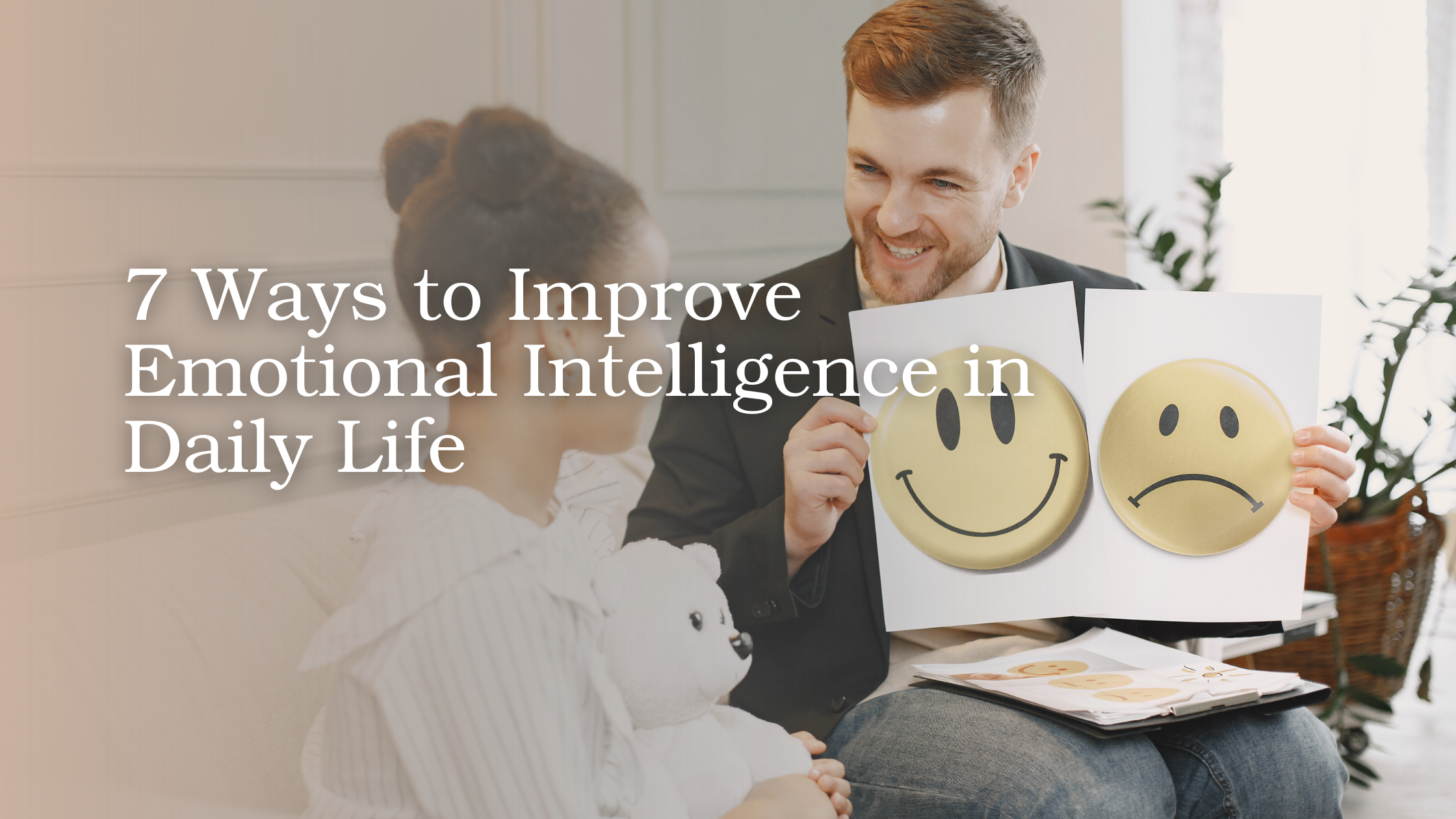
Emotional intelligence (EI) is often described as the ability to understand and manage your own emotions while also recognizing and responding effectively to the emotions of others. In real life, it’s less about theory and more about how you react when your partner says something triggering, how you handle stress at work, or how you respond when you feel overwhelmed.
Building emotional intelligence can support healthier relationships, clearer communication, better decision-making, and greater awareness of your own needs.
In therapy, emotional intelligence is not treated as a single skill, but as a set of skills that can be learned. Below are seven practical ways to improve emotional intelligence in your daily life.
Practical Ways to Build Emotional Intelligence
Emotional intelligence develops through small, everyday choices. The following seven practical strategies can help you understand your emotions, respond more thoughtfully, and build stronger communication skills.

1. Start With Emotional Awareness, Not Control
Most people try to “manage” emotions before they even understand them. This generally This can lead to feelings being pushed aside or ignored.
Emotional awareness means being able to accurately identify what you’re feeling in the moment. Instead of saying “I’m stressed,” you might notice:
- “I’m feeling anxious about an upcoming deadline.”
- “I’m frustrated because I don’t feel heard.”
- “I’m overwhelmed and mentally fatigued.”
Putting your feelings into words can make them easier to understand and communicate. Instead of simply thinking, “Something feels wrong,” you can begin to identify what is actually happening.
How to practice:Pause during emotionally charged moments and ask:
- What exactly am I feeling?
- Where do I feel it in my body?
- What triggered this?
Once you can recognize what you are feeling, the next step is learning how to create space between that feeling and your response.
2. Learn to Pause Before Reacting
Emotional intelligence shows up most clearly in the space between feeling and reacting.
When emotions become intense, it can be harder to think clearly. You may react quickly, shut down, or say something you later regret.
Why this matters:A short pause gives you time to notice what you are feeling and choose how you want to respond instead of reacting automatically.
How to practice:
- Take a slow breath in and out before responding
- Count to five silently
- If needed, say: “I need a moment to think about this”
Pausing helps you manage the moment, but you also need the right words to understand and explain what you are feeling.
3. Build Emotional Vocabulary Beyond “Good” and “Bad”
Many adults operate with a limited emotional vocabulary, which restricts their ability to process and communicate feelings effectively.
Emotions are nuanced. For example, what feels like anger may actually be:
- Hurt
- Disappointment
- Fear
- Embarrassment
When emotions remain vague, they are harder to regulate and easier to miscommunicate.
Being specific about your emotions can also make communication easier. When you know whether you feel hurt, disappointed, worried, or frustrated, it becomes easier to explain what you need.
How to practice:Expand your emotional language:
- Instead of “I feel bad,” try “I feel discouraged”
- Instead of “I’m angry,” try “I feel disrespected” or “I feel unheard”
Once you can name your emotions, you can take the next step by looking at the thoughts that may be shaping those feelings.

4. Understand the Link Between Thoughts and Emotions
Emotions don’t occur in isolation. They are often shaped by how we interpret situations.
For example:
- Situation: A friend doesn’t reply to your message
- Thought: “They’re ignoring me”
- Emotion: Hurt or anger
But if the thought changes:
- “They might be busy”
- Emotion: Neutral or mildly concerned
This is an important idea in Cognitive Behavioral Therapy (CBT): the way we interpret a situation can influence how we feel and respond.
Why this matters:If you only focus on changing emotions without addressing underlying thoughts, the same emotional patterns will repeat.
How to practice:When you notice a strong emotional reaction, ask:
- What am I telling myself about this situation?
- Is there another possible explanation?
This doesn’t mean forcing positivity. It means developing more flexible thinking. This same CBT-based reframing is central to how mindfulness-based therapy reduces anxiety.
Understanding your thoughts is one part of emotional intelligence. The next step is learning to stay present and understand what other people may be feeling too.
5. Practice Active Listening in Conversations
Emotional intelligence is not only about understanding yourself. It also involves noticing what other people may be feeling and listening to them with attention.
One of the most overlooked skills in EI is listening. Not just hearing words, but understanding the emotional message behind them.
Many people listen with the intention to respond, not to understand. This can lead to miscommunication and emotional disconnect.
What active listening looks like:
- Maintaining eye contact
- Not interrupting
- Reflecting back what the other person said (“It sounds like you felt…”)
- Paying attention to tone and body language
Why this matters:When people feel heard, emotional intensity often decreases. This creates space for more productive and meaningful conversations. For more specific techniques, see 9 best practices to be a better listener in your relationship.
Listening helps you understand others, while emotional regulation helps you manage your own reactions during difficult moments.
6. Regulate Emotions Instead of Suppressing Them
There’s a common misconception that emotional intelligence means staying calm all the time. In reality, it’s about managing emotions, not eliminating them.
Suppression or pushing emotions away can lead to increased stress, physical tension, and even emotional outbursts later on.
Regulation, on the other hand, involves acknowledging emotions and choosing how to respond to them.
Simple strategies for emotional regulation:
- Deep breathing to calm physiological arousal
- Physical movement (walking, stretching)
- Writing down thoughts to process emotions
- Mindfulness techniques to stay present
Mindfulness can also help you notice difficult emotions without immediately reacting to them. The goal is not to push the emotion away, but to understand it and choose how you respond.
Suppressing emotions instead of regulating them is a common driver of how resentment builds in a relationship and what to do about it.
How to practice:When you feel overwhelmed, try:
- “I’m feeling anxious right now, and that’s okay”
- Focus on your breath for 60 seconds
- Delay major decisions until emotions settle
Managing emotions in the moment is helpful, but long-term improvement also comes from noticing the patterns that repeat in your daily life.
7. Reflect on Emotional Patterns, Not Just Moments
Improving emotional intelligence is not just about handling isolated situations, it’s about recognizing patterns over time.
For example:
- Do you tend to shut down during conflict?
If shutting down is your specific pattern, it’s worth understanding stonewalling in a relationship in more depth.
- Do you react defensively to feedback?
- Do certain situations consistently trigger anxiety?
These patterns often have deeper roots, including past experiences, learned behaviors, or core beliefs.
Why reflection matters:Without reflection, the same emotional cycles repeat. With awareness, change becomes possible.
How to practice:At the end of the day or week, ask:
- What emotional situations stood out?
- How did I respond?
- What would I like to do differently next time?
Journaling can be useful because it gives you a simple way to notice patterns over time. You may begin to see what situations trigger certain emotions and how your usual responses affect the outcome.
Emotional intelligence is not about being perfect with your emotions. It’s about becoming more aware, more intentional, and more responsive over time.
Small, consistent changes like pausing before reacting, naming emotions accurately, or listening more deeply can significantly improve how you experience and navigate daily life.
These seven skills can help you become more aware of your emotions and responses. The next step is to turn these ideas into simple habits that you can practice consistently in daily life.
How to Build Emotional Intelligence Over Time
You do not need to practice all seven skills at once. Start with one area that feels most useful to you, such as pausing before reacting, naming your emotions, or listening more carefully.
Practice that skill regularly and pay attention to what changes. Over time, small improvements can help you manage emotions, communicate more clearly, and respond more thoughtfully in everyday situations.
If you continue to struggle with strong emotional reactions or repeated relationship patterns, professional support may also be helpful.
When to Seek Support
Many people can build emotional intelligence through self-awareness and daily practice. However, it may be helpful to seek professional support if emotional reactions continue to affect your daily life or relationships.
If these difficulties continue despite your efforts, it may be helpful to speak with a mental health professional. Consider seeking support if you:
- Feel overwhelmed by your emotions on a regular basis
- Struggle with repeated conflict in your relationships
- Find it difficult to control strong emotional reactions
- Keep repeating patterns you do not understand (if this describes you specifically, see how individual therapy helps you break patterns you keep repeating).
- Have trouble communicating your needs or setting healthy boundaries
- Feel that past experiences continue to affect your relationships
Therapy can provide a supportive space to understand these patterns and develop practical ways to respond differently.
If you feel ready to work on these areas with professional guidance, a therapist can help you turn emotional awareness into practical, lasting changes.
How Dr. Christopher Joaquim Can Help
Understanding emotional intelligence is one thing. Learning how to use these skills when emotions are high can be much harder.
Dr. Christopher Joaquim brings more than 21 years of experience working with individuals and couples who want to better understand their emotions, improve communication, and build healthier relationships.
His approach focuses on helping clients understand what triggers their emotional reactions and develop practical ways to respond differently. Rather than simply trying to suppress difficult emotions, the goal is to build greater awareness, communication, and emotional control.
Depending on your needs, therapy may help you:
- Recognize emotional triggers and recurring patterns
- Understand how thoughts affect feelings and behavior
- Communicate your needs more clearly
- Manage difficult emotions in healthier ways
- Build stronger boundaries and relationships
- Respond more thoughtfully during stressful situations
The goal is not to stop having difficult emotions. It is to help you understand them, work through them, and make more intentional choices.
If you feel stuck in the same emotional or relationship patterns despite trying to change them on your own, working with an experienced professional like Dr. Joaquim can provide personalized guidance and support.
If you’re unsure whether this is something you can work through with self-practice alone, see individual therapy vs self-help: when you actually need a therapist.
Whether you work on these skills on your own or with professional support, emotional intelligence develops through small changes repeated over time.
Building Emotional Intelligence Takes Practice
Improving emotional intelligence starts with small, everyday choices. You can pause before reacting, name your emotions, listen more carefully, and notice the thoughts behind your feelings.
You do not have to change everything at once. Choose one skill and practice it regularly. Over time, these small changes can help you manage emotions, communicate more clearly, and build healthier relationships.
If you continue to feel overwhelmed by your emotions or struggle with repeated relationship patterns, professional support can help you understand what is getting in the way and find healthier ways forward.
Frequently Asked Questions
Emotional intelligence is the ability to understand your emotions, manage your reactions, and recognize what other people may be feeling. It can help you communicate better, handle stress, and build healthier relationships.
Yes. Emotional intelligence can be developed through regular practice. Skills such as emotional awareness, active listening, pausing before reacting, and recognizing emotional patterns can become stronger over time.
The seven practical ways include building emotional awareness, pausing before reacting, expanding your emotional vocabulary, understanding the link between thoughts and emotions, practicing active listening, regulating emotions, and reflecting on emotional patterns. Practicing these skills regularly can help you become more aware and thoughtful in how you respond.
Emotional awareness helps you understand what you are feeling and why. When you can identify an emotion more clearly, you may find it easier to communicate your needs and choose how you want to respond.
Try creating a short pause before responding. Take a slow breath, notice what you are feeling, and give yourself time to think before speaking or making a decision. With practice, this can help reduce automatic reactions.
Emotional intelligence does not mean controlling or hiding every emotion. It means understanding your emotions and choosing how to respond to them in a healthy and thoughtful way.
Emotional intelligence can help you understand your own reactions, listen to your partner, communicate your needs, and handle disagreements more calmly. These skills can support stronger and healthier relationships.
Yes. Therapy can help you understand emotional patterns, identify triggers, improve communication, and develop healthier ways to respond to difficult emotions. A therapist can also provide personalized guidance based on your needs.
Consider seeking professional support if strong emotions regularly interfere with your relationships, work, sleep, or daily activities, or if you continue repeating emotional patterns that are difficult to change on your own.