
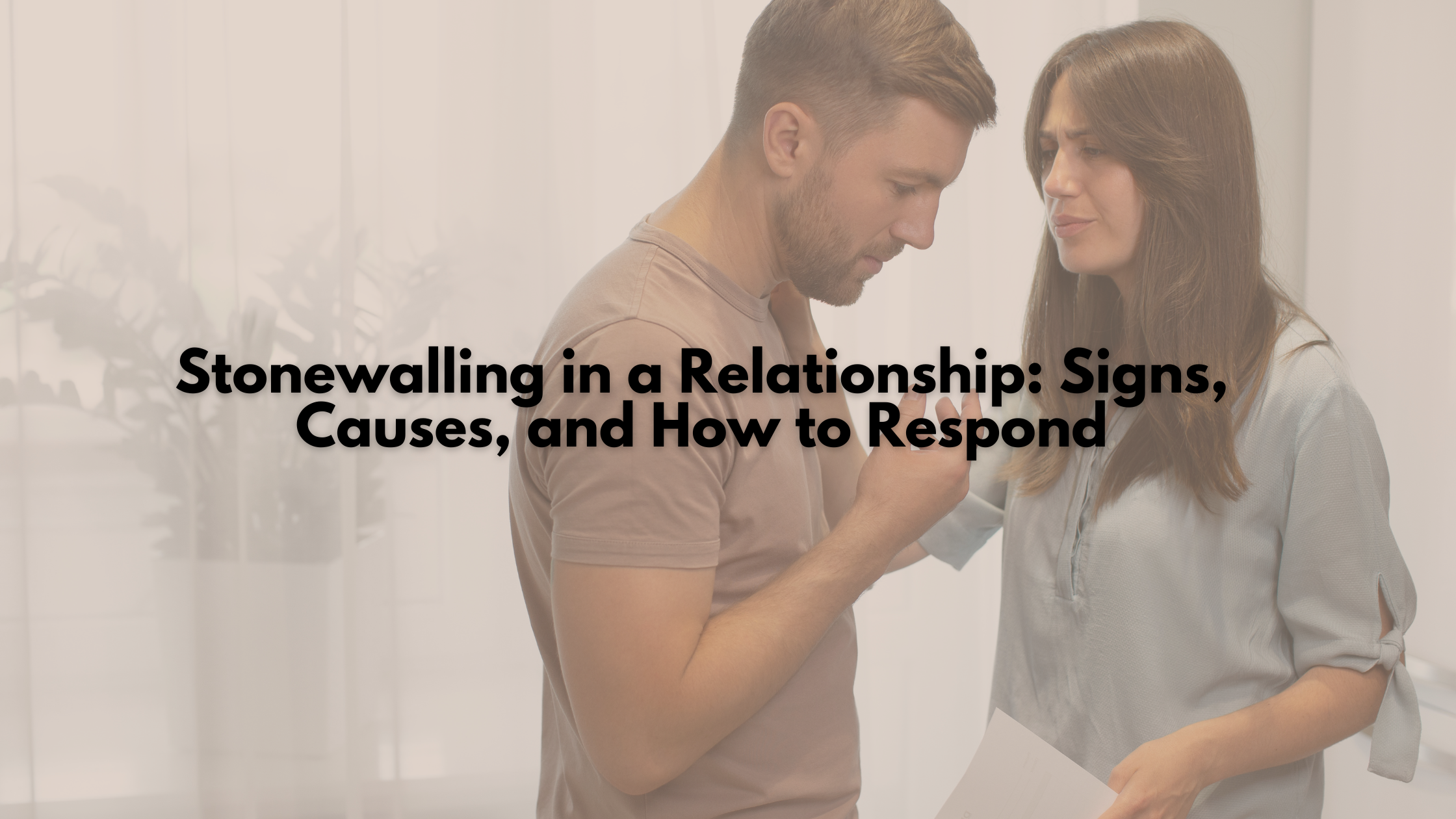
Have you ever felt like you’re talking to a wall during an argument? You’re trying to explain how you feel or solve a problem, but your partner goes silent, stops responding, or walks away.
This behaviour is often called stonewalling. It happens when one partner shuts down or pulls away during a difficult conversation, especially during an argument. Sometimes, the person is not trying to ignore their partner. They may simply feel too overwhelmed to keep talking.
Stonewalling can sometimes happen because a person feels overwhelmed and needs time to calm down. But when it becomes a repeated pattern, it can create distance, frustration, and unresolved conflict in a relationship.
In this article, we’ll explain what stonewalling looks like, why it happens, how it differs from taking healthy space, and what you can do if stonewalling has become part of your relationship.
What is Stonewalling?

Stonewalling happens when someone shuts down or pulls away during a conversation, usually when things become difficult or emotional. Instead of talking through the issue, they may go quiet, stop responding, or leave the conversation.
Rather than expressing thoughts or feelings, the person withdraws. This isn’t always intentional; in many cases, it’s a response to feeling stressed, or unable to process emotions in that very moment.
What Does Stonewalling Look Like in Real Life?
Stonewalling can show up in subtle or obvious ways, such as:
- Remaining silent or refusing to respond during an argument
- Avoiding eye contact or turning away
- Giving short, dismissive answers
- Physically leaving the room without explanation
- Appearing emotionally distant or “checked out”
For the other person, this can be confusing and hurtful. They may start wondering, “Why won’t they talk to me?” or “Does this even matter to them?”
Stonewalling vs. Taking Healthy Space
It’s important to understand that not all withdrawal is unhealthy.
- Healthy space involves communicating your need for a break:
Example: “I’m feeling overwhelmed. Can we pause and talk about this in 20 minutes?”
It’s temporary, respectful, and comes with the intention to return. - Stonewalling is different because there is usually no clear explanation or plan to come back to the conversation. The other person is left wondering what happened and when, or even if, the issue will be discussed again.
Understanding this difference also helps explain why someone may shut down in the first place.
Why Do People Stonewall?
If your partner is stonewalling you, it can be easy to think they simply do not care. But that is not always the reason. Some people shut down because they feel overwhelmed, anxious, or unsure of what to say.
Emotional Overwhelm (“Flooding”)
Sometimes, an argument becomes so intense that a person feels completely overwhelmed. They may struggle to think clearly or find the right words, so going quiet feels easier than continuing the conversation.
Fear of Conflict or Saying the Wrong Thing
For some, conflict feels threatening. They may worry that speaking up will make things worse and lead to more arguments. Staying silent can feel safer than risking saying something they might regret later.
Learned Behaviour from Past Experiences
Stonewalling can also come from what someone learned growing up. If difficult emotions were ignored at home or arguments often ended badly, staying quiet may have become their usual way of dealing with conflict.
Avoidance as a Coping Mechanism
Avoiding difficult conversations can feel easier in the short term. By withdrawing, a person temporarily escapes discomfort. However, this often leads to unresolved issues building up over time.
Lack of Communication Skills
Not everyone has been taught how to express emotions or work through conflict in a healthy way. When words don’t come easily, silence can become the default response.
Signs of Stonewalling in a Relationship
Stonewalling may not be obvious at first, especially if it only happens during stressful arguments. But when the same behaviours keep showing up, they can start to affect how connected you feel as a couple.
- One partner shuts down during disagreements: Instead of engaging, they go silent or withdraw when conflict arises.
- Conversations end abruptly without being solved: Discussions are cut short, often leaving important issues unresolved.
- Repeated emotional distance: There’s a noticeable lack of emotional presence, especially during important conversations.
- The other person feels ignored, dismissed, or invalidated: The other partner may feel unheard or as though their feelings don’t matter.
How to Respond to Stonewalling
Being stonewalled can be frustrating and hurtful. You may want to keep asking questions until your partner responds, but pushing harder can sometimes make them shut down even more. Instead, try to slow things down.

Stay Calm and Avoid Heated Arguments
You may feel like you need an answer right away, especially when you are already upset. But repeatedly asking questions, raising your voice, or demanding a response can make the situation worse. Give both of you a little time to calm down.
Express Your Feelings Clearly
When you do communicate, focus on expressing how you feel rather than blaming your partner.
Using “I” statements like “I feel ignored when our conversations stop suddenly” can help your partner be less defensive.
Set Gentle Boundaries
Let your partner know that you understand they may need some space, but you also need the conversation to continue later. This makes it clear that taking a break is okay, but completely avoiding the problem is not.
Give Your Partner Space With Structure
Taking a break can be helpful, but it should be intentional. Agree to revisit the conversation at a specific time, so it doesn’t get avoided altogether.
Giving your partner space is one part of breaking the cycle. But if you are the one who tends to shut down during conflict, there are also steps you can take to change this pattern.
How to Stop Stonewalling If You’re Doing It
If you recognize that you are the one who shuts down during difficult conversations, do not be too hard on yourself. This can become a habit, but you can learn to handle those moments differently.
Here’s how you can start changing the pattern:
1. Recognize Your Triggers
Notice what situations, words, or feelings tend to make you withdraw. Awareness is the first step toward change.
2. Take Intentional Breaks Instead of Shutting Down
If you need a break, tell your partner instead of simply walking away. You could say, “I’m getting overwhelmed. I need 10 minutes to calm down, and then I’ll come back so we can talk.”
3. Communicate Your Need for Space
Let your partner know what’s happening:
“I’m feeling overwhelmed and need 10 minutes to gather my thoughts, then we can continue.”
This keeps communication open while giving you breathing room.
4. Practise Emotional Regulation Techniques
Simple things like slow breathing, taking a short walk, or writing down what you are feeling can help you calm down before continuing the conversation.
5. Build Communication Skills Over Time
Practice expressing your feelings calmly and constructively. Over time, you’ll feel more confident handling conflict without withdrawing.
If you have tried to change the pattern but keep ending up in the same place, it may be time to look at what is making these conversations so difficult.
When to Seek Professional Help
Occasional withdrawal during a stressful conversation does not automatically mean there is a serious problem. But if stonewalling keeps happening and you cannot seem to break the cycle, getting some outside support may help. Consider reaching out for help if:
- Arguments regularly end with one person shutting down: You may keep having the same conversation without ever getting to a solution.
- The same problems keep coming back: If important issues are repeatedly left unresolved, frustration and resentment can slowly build.
- You feel anxious about bringing things up: You may avoid normal conversations because you are worried your partner will shut down or walk away.
- You both want things to change but cannot do it alone: Sometimes the pattern is so familiar that it becomes difficult to see how to break it without help.
How Dr. Christopher Joaquim Can Help
Dr. Christopher Joaquim brings more than 21 years of experience working with individuals and couples through relationship and communication challenges. His approach looks beyond the silence itself to understand what is happening underneath it, whether that is feeling overwhelmed, struggling to express emotions, or falling into the same conflict cycle again and again.
With his guidance, couples can learn to:
- Understand what triggers shutdown and withdrawal
- Talk about difficult feelings without making the conflict worse
- Take space without completely disconnecting
- Build healthier ways to handle disagreements
- Reconnect after difficult conversations
The goal is not to decide who is right or wrong. It is to help both partners understand what is happening between them and find healthier ways to handle difficult moments.
When both partners understand the cycle, it becomes easier to replace silence and frustration with more open and respectful communication.
Conclusion
Stonewalling can make you feel ignored, frustrated, and alone, especially when you are trying to solve a problem together. But shutting down does not always mean that someone does not care. Sometimes, it means they do not know how to handle what they are feeling.
The important thing is to notice the pattern and work on it. If you need space, ask for it instead of disappearing. If your partner shuts down, give them room while making it clear that the conversation still matters.
Healthy relationships are not free from arguments. They are built on learning how to handle those difficult moments without pushing each other further apart.
If stonewalling keeps happening despite your efforts, professional support can help you understand the cycle and find a healthier way forward.
Frequently Asked Questions
What is stonewalling in a relationship?
Stonewalling is when one person shuts down or stops engaging during a difficult conversation. They may become silent, avoid eye contact, give short answers, or leave the conversation. It often happens when someone feels overwhelmed, although repeated stonewalling can create distance in a relationship.
Is stonewalling the same as needing space?
No. Taking healthy space usually means telling your partner that you need a break and agreeing to come back to the conversation later. Stonewalling often involves shutting down without explaining what is happening or when the conversation will continue.
Why does my partner shut down during arguments?
A partner may shut down because they feel overwhelmed, anxious, or unsure how to express what they are feeling. Past experiences can also shape how someone responds to conflict. However, if shutting down happens often, it can become an unhealthy communication pattern.
How should I respond when my partner stonewalls me?
Try not to force an immediate response or make the argument more heated. Give your partner some space while making it clear that the conversation still matters. You can suggest taking a short break and agreeing on a time to talk again.
Can stonewalling damage a relationship?
Yes, especially when it happens regularly. Repeated stonewalling can leave one partner feeling ignored or rejected and can cause frustration, resentment, and emotional distance. Unresolved problems may also keep coming back.
How can I stop stonewalling my partner?
Start by noticing what makes you shut down during difficult conversations. When you feel overwhelmed, explain that you need a short break instead of simply going silent or walking away. Learning to calm yourself and express your feelings more clearly can also help.
What should I say if I need space during an argument?
You can keep it simple and reassuring. For example, you might say, “I’m feeling overwhelmed right now. I need a little time to calm down, but I do want to come back and talk about this.” This lets your partner know that you are taking a break, not avoiding the issue.
Is stonewalling always intentional?
No. Some people shut down without realizing how their behaviour affects their partner. They may feel overwhelmed or have learned to avoid conflict. Even when it is not intentional, repeated stonewalling can still affect the relationship.
When should I seek professional help for stonewalling?
Consider professional support if stonewalling happens often, important conversations are never resolved, or you both feel stuck in the same conflict cycle. A therapist can help you understand what is behind the pattern and develop healthier ways to communicate.
Can couples therapy help with stonewalling?
Yes. Couples therapy can help partners understand why one person shuts down and why the other may push harder for a response. With guidance, couples can learn to take healthy breaks, communicate more clearly, and return to difficult conversations without making the conflict worse.