
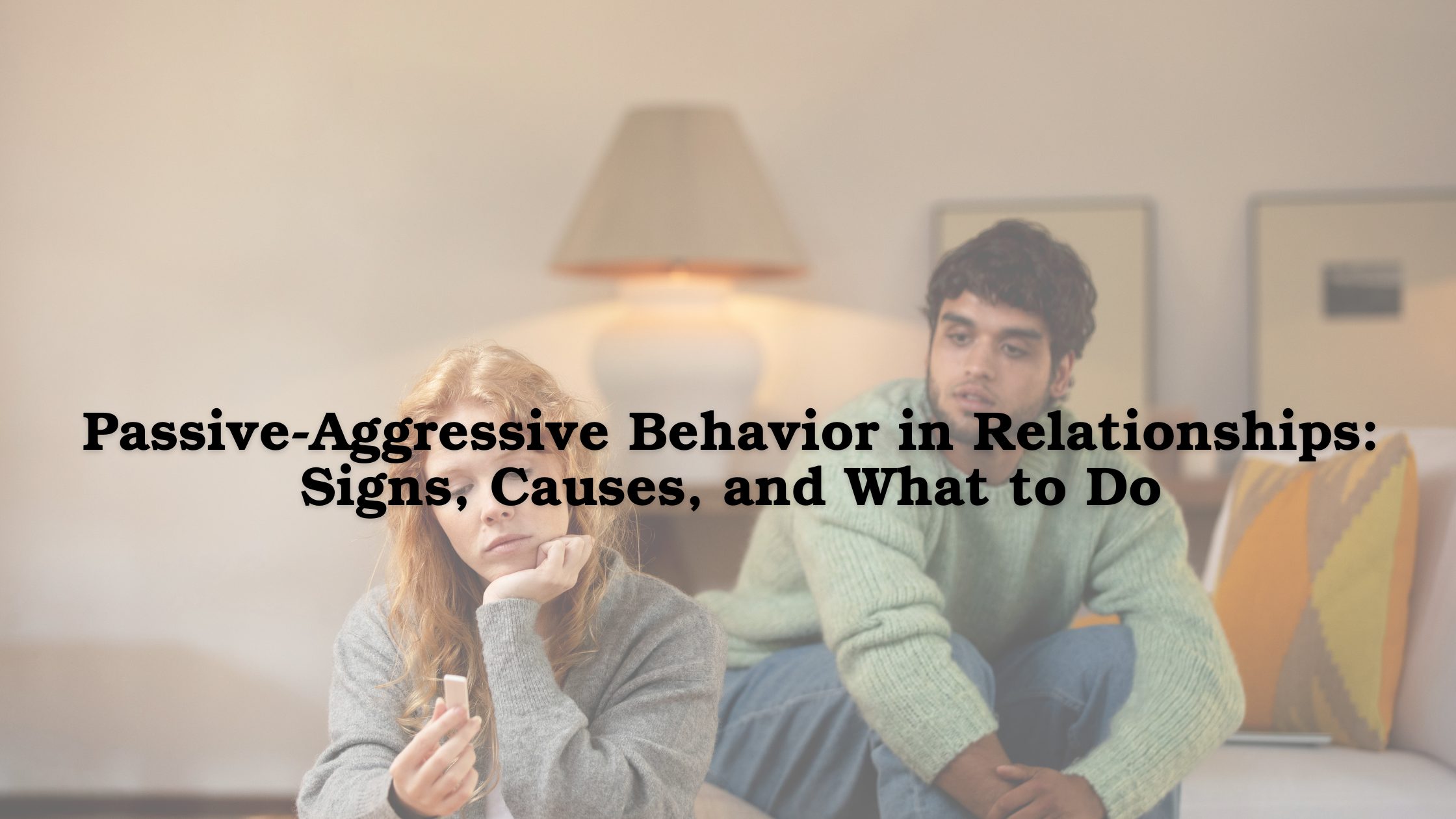
You may know that something is wrong with your partner, but you cannot always tell what it is. They may say “I’m fine” while acting upset, make sarcastic comments, avoid conversations, or agree to something and then not follow through.
These behaviors can leave you confused and frustrated. You may start wondering, “Did I do something wrong?” or “Why can’t we just talk about it?”
This can be a sign of passive-aggressive behavior. Instead of expressing anger or hurt directly, a person may show it through silence, sarcasm, avoidance, or other indirect actions.
In this article, we’ll look at what passive-aggressive behavior looks like, why it happens, how it can affect a relationship, and what you can do when you are dealing with it.
What Does Passive-Aggressive Behavior Look Like?
“What is passive-aggressive behavior in a relationship?” Include the core characteristics—indirect expression of anger or resentment, avoidance of direct communication, and examples such as sarcasm, silence, or deliberately delaying tasks.
This can be confusing because the person may say one thing while their actions suggest something else.

Passive-Aggressive vs. Direct Communication
The difference between passive-aggressive and healthy communication often comes down to how directly a person expresses what they feel or need.
| Passive-Aggressive Communication | Direct Communication |
| “Fine. Do whatever you want.” | “I’m upset because I wanted us to discuss this together.” |
| “I guess I’ll have to do everything myself.” | “I need more help with these responsibilities.” |
| “Nothing is wrong.” while acting distant | “I’m frustrated and need some time before we talk.” |
| “Nice of you to finally help.” | “I appreciate your help. I would like us to share this responsibility more consistently.” |
| Ignoring a partner after an argument | “I’m too upset to talk right now. Can we discuss this later today?” |
Direct communication does not mean avoiding difficult emotions. It means expressing concerns, feelings, and needs clearly enough that both partners have an opportunity to understand what is happening and respond constructively.
What Are the Signs of Passive-Aggressive Behavior?
The signs of passive-aggressive behavior are not always easy to recognize. Nothing may seem seriously wrong at first, but you may still feel that something is off between you and your partner.
You might notice that your partner says they are “fine” but acts distant for the rest of the day. They may agree to do something and then keep putting it off. Sometimes, they may use sarcasm or jokes to express anger instead of telling you directly what is bothering them.
You may also find yourself constantly trying to figure out what they really mean. Instead of having a clear conversation, you are left guessing, asking questions, or trying to fix the tension on your own.
Some common things you may notice include:
- They give you the silent treatment: They stop talking to you or become distant instead of explaining what upset them.
- They use sarcasm during disagreements: Their words may sound like jokes, but you can tell there is anger or criticism behind them.
- They agree but do not follow through: They may say yes to something but repeatedly delay it, forget it, or avoid doing it.
- They say “I’m fine” when they clearly are not: Their words say everything is okay, but their tone, actions, or behavior suggest otherwise.
- They make subtle comments that hurt: Small remarks about your choices, habits, or mistakes may leave you feeling criticized without having a clear conversation about the issue.
- You feel like you are always guessing: You may spend a lot of time wondering what is wrong or whether you have done something to upset them.
Additional Signs of Passive-Aggressive Behavior
Passive-aggressive behavior can also appear in less obvious ways. Some patterns may include:
- Withholding affection or attention: A partner may intentionally become distant, stop showing affection, or withdraw attention instead of explaining what is upsetting them.
- Deliberately delaying shared responsibilities: They may agree to complete a task but repeatedly put it off or take unusually long to do it, particularly when they are unhappy about the responsibility.
- Using indirect criticism: Instead of openly discussing a concern, they may make subtle remarks about your choices, habits, or mistakes.
- Using guilt instead of expressing needs: A partner may make comments that leave you feeling guilty or responsible rather than directly explaining what they need or what is bothering them.
- Making subtle remarks instead of addressing the issue: They may use hints, jokes, or seemingly casual comments to communicate frustration rather than having a direct conversation.
These behaviours do not automatically mean someone is being passive-aggressive. What matters is whether they occur repeatedly and become a pattern of avoiding honest communication.
Not every quiet moment, forgotten task, or sarcastic comment means someone is being passive-aggressive. The bigger concern is a repeated pattern that makes honest communication difficult. Everyone communicates poorly sometimes. What matters is whether these behaviors happen repeatedly and are used instead of having an honest conversation about the problem.
Focus on the Behavior, Not the Label
It can be tempting to label a partner as “passive-aggressive” when their behavior feels confusing or hurtful. However, it is usually more helpful to focus on the specific behavior and how it affects the relationship.
For example, instead of saying “You are being passive-aggressive,” you might say, “When you agree to something but repeatedly delay doing it, I feel frustrated and unsure about what is happening.”
A single instance of silence, sarcasm, avoidance, or a forgotten responsibility does not necessarily indicate passive-aggressive behavior. Stress, discomfort with conflict, difficulty communicating, or unresolved emotions can also influence how someone responds.
Looking at repeated patterns rather than assigning a label can make it easier to have a productive conversation about what needs to change.
Why Passive-Aggressive Behavior Happens
There can be different reasons behind passive-aggressive behavior. Some people may have learned to hide anger or disagreement because speaking openly about feelings was difficult or discouraged in their past.
1. Fear of confrontation
Some people find direct conflict extremely uncomfortable. Instead of expressing frustration openly, they may resort to indirect behaviours to avoid arguments or emotional tension.
2. Difficulty expressing emotions
Not everyone grows up learning how to articulate their feelings clearly. When someone to express anger or communicate emotions , disappointment, or hurt, passive-aggressive behaviour can become a coping mechanism.
3. Feeling powerless
In situations where someone feels unheard or unable to influence decisions, passive resistance may feel like the only way to express dissatisfaction.
4. Resentment and unresolved frustrations often accumulate over time. Passive-aggressive behaviour can become a way to release these emotions without initiating a difficult conversation.
Understanding these underlying causes is important because passive aggression is not always about the immediate situation. It may also reflect deeper emotional struggles.
How Passive-Aggressive Behavior Affects Relationships
Although passive aggression may seem less intense than open conflict, its long-term impact on relationships can be significant.
1. Emotional confusion
When communication is indirect, partners may struggle to understand what the other person is feeling or expecting. This can lead to misunderstandings and unnecessary tension.
2. Growing resentment
Because the real issue is never openly addressed, both partners may begin to feel increasingly frustrated or hurt.
3. Breakdown of trust
Repeated passive-aggressive behaviour can make one partner feel manipulated, criticised, or emotionally unsafe.
4.Avoidance of real solutions
When conflict remains indirect, couples never fully address the root cause of their problems. This allows small issues to grow into larger relationship challenges.
Over time, these patterns can weaken the sense of partnership and emotional security that healthy relationships depend on.
What to Do When Your Partner Is Passive-Aggressive
If your partner often communicates this way, you may not know whether to speak up, give them space, or let the situation go. These steps can help you respond without making the situation worse. Rather than reacting defensively, it helps to focus on understanding and addressing the underlying issue.

1. Recognise the pattern
Start by noticing the pattern instead of reacting to each incident on its own. Recognising patterns such as sarcasm, avoidance, or delayed cooperation can help bring awareness to the communication dynamic.
Once the behaviour is identified, it becomes easier to address it constructively rather than reacting emotionally.
2. Encourage direct communication
Instead of Saying This, Try Saying This
When you notice passive-aggressive behavior, the way you approach the conversation can affect whether your partner becomes more defensive or more willing to communicate.
Instead of:
“You’re always passive-aggressive.”
Try:
“I notice that we sometimes avoid talking about what is bothering us. Can we discuss what happened?”
Instead of:
“You obviously don’t want to talk to me.”
Try:
“It feels like you’re upset about something. If you’re ready, I’d like to understand what is bothering you.”
Instead of:
“Fine, I’ll just stop talking to you too.”
Try:
“I don’t think ignoring each other will help us resolve this. Let’s take some time to calm down and talk when we’re ready.”
The goal is to describe what you notice, explain how it affects you, and invite a direct conversation rather than responding with another indirect or defensive behaviour.
Creating a safe environment for honest conversations can reduce passive-aggressive responses. Encourage open dialogue by asking calm, non-judgmental questions such as:
- “It feels like something is bothering you. Do you want to talk about it?”
- “I’d rather hear what you’re really feeling so we can work through it together.”
This approach shifts the conversation toward clarity instead of accusation.
3. Avoid escalating the situation
Responding to passive aggression with anger or criticism can intensify the problem. Remaining calm and emotionally grounded helps prevent the conflict from spiralling.
When both partners feel safer expressing themselves, honest communication can become easier.
4. Set clear boundaries
If passive-aggressive behaviour becomes frequent, it is important to establish boundaries. Calmly expressing how the behaviour affects you can help reinforce healthier communication expectations.
For example:
“I’d prefer if we talk directly about problems instead of avoiding them. It helps me understand what’s going on.”
Clear boundaries encourage accountability without escalating the conflict.
5. Focus on the underlying issue
Often, passive aggression is only a symptom of a deeper concern. Instead of focusing solely on the behaviour, try to understand the emotions behind it.
Questions such as “What’s really bothering you?” or “Is something else causing stress?” can open the door to more meaningful conversations.
What Not to Do When Your Partner Is Passive-Aggressive
Knowing what to avoid can be just as important as knowing how to respond. Some reactions may unintentionally reinforce the same communication pattern.
- Do not respond with sarcasm: Returning sarcasm with sarcasm can turn the conversation into a cycle of indirect criticism.
- Do not retaliate with the silent treatment: Withdrawing communication to punish your partner can increase emotional distance rather than solve the underlying issue.
- Do not repeatedly demand an immediate explanation: If your partner is struggling to communicate, pressuring them repeatedly may make them more defensive or withdrawn. Give the conversation some space while making it clear that the issue still needs to be addressed.
- Do not focus on winning the argument: Trying to prove who is right can shift attention away from the actual problem and make constructive communication more difficult.
- Do not assume you know what your partner is feeling: Ask questions instead of interpreting every action or comment as intentional hostility.
- Do not ignore repeated patterns indefinitely: Giving someone space can be helpful, but repeatedly avoiding the underlying issue may allow resentment and communication problems to grow.
The goal is not to respond to passive-aggressive behavior with another form of indirect communication. Instead, focus on calm, direct conversations and clear boundaries.
How Couples Can Build Healthier Communication
Improving communication in your relationship requires effort from both partners. Couples who intentionally create space for open dialogue often experience stronger emotional connections.
- Practice honest conversations: Setting aside time for calm discussions can prevent frustrations from building up over time.
- Express emotions clearly: Using “I feel” statements instead of blame can help partners communicate their needs without triggering defensiveness.
- Develop emotional awareness: Understanding personal triggers and emotional patterns helps individuals respond more thoughtfully during conflict.
- Prioritise empathy: Listening without immediately reacting or defending can create a sense of safety and understanding within the relationship.
When Professional Support Can Help
Sometimes passive-aggressive patterns become deeply ingrained in a relationship, making it difficult for couples to resolve issues on their own. Couples therapy can provide a neutral space where both partners feel heard and understood.
Relationship counselling can help couples identify communication patterns, explore underlying emotions, and develop practical strategies for healthier interaction.
Working with a trained therapist can also help partners rebuild trust and reconnect emotionally.
Why Work With Dr Christopher Joaquim
If passive-aggressive communication has become a repeated pattern in your relationship, therapy can give you both a safe place to talk about what is happening without turning every conversation into another argument. Dr. Christopher Joaquim works with individuals and couples dealing with communication and relationship issues.
Therapy can give couples a safe place to talk about these patterns without turning every conversation into another argument. Through evidence-based therapeutic techniques, he helps couples understand the deeper emotional patterns influencing their behaviour.
Dr Joaquim works collaboratively with clients to improve communication, resolve conflict, and strengthen emotional connection. His practical and compassionate approach allows couples to develop healthier ways of relating to one another while addressing the root causes of relationship difficulties.
For individuals and couples struggling with passive-aggressive communication, couple therapy can provide valuable clarity and direction.
Final Thoughts
Passive-aggressive behaviour in relationships can quietly damage relationships when emotions remain unspoken and conflicts stay unresolved. Recognising these patterns is the first step toward changing how you communicate with each other.
By encouraging honest communication, practising empathy, and addressing underlying concerns, couples can move beyond indirect conflict and build stronger emotional connections.
Healthy relationships are not free from disagreements, but they thrive when both partners feel safe expressing their true thoughts and feelings.
Frequently Asked Questions
What is passive-aggressive behavior in a relationship?
Passive-aggressive behavior means expressing anger, hurt, or frustration indirectly instead of talking about the problem openly. It may show up through sarcasm, silent treatment, avoidance, delayed tasks, or subtle criticism.
What are common examples of passive-aggressive behavior?
Common examples include giving the silent treatment, making sarcastic comments, agreeing to something but not following through, delaying responsibilities, saying “I’m fine” while clearly being upset, or using humor to hide criticism.
Is passive-aggressive behavior toxic?
Passive-aggressive behavior can become harmful when it happens often and makes honest communication difficult. It can leave both partners feeling confused, frustrated, or emotionally distant. However, these patterns can sometimes improve when both people are willing to communicate more openly.
Why do people behave in a passive-aggressive way?
People may behave this way because they fear confrontation, have difficulty expressing emotions, feel unheard, or have unresolved resentment. Some people may also have learned indirect communication from past relationships or family environments.
How should you respond to passive-aggressive behavior?
Try to stay calm instead of responding with anger or sarcasm. Talk about the specific behavior you noticed and invite your partner to explain what is bothering them. Clear, respectful communication can help prevent the situation from becoming a bigger conflict.
Can passive-aggressive behavior damage a relationship?
Yes. When problems are repeatedly left unspoken, resentment can grow and trust can become weaker. Over time, partners may feel emotionally disconnected or unsure about how to communicate with each other.
What should I do if my partner denies being passive-aggressive?
Try not to focus on proving that your partner is passive-aggressive. Instead, talk about the specific behavior and how it affects you. For example, you could say, “When you stop talking to me after an argument, I feel confused and don’t know how to resolve the problem.” This keeps the conversation focused on the behavior rather than labeling your partner.
Can passive-aggressive behavior change?
Yes, passive-aggressive communication patterns can change when a person becomes aware of the behavior and is willing to develop healthier ways of expressing anger, frustration, disappointment, or unmet needs.
Change usually begins with recognising the pattern and understanding what is happening beneath it. Both partners can then work on communicating more directly, listening without immediately becoming defensive, and practising healthier ways to handle disagreements.
If the pattern has become deeply established or is affecting trust and emotional connection, couples therapy can provide a structured space to understand the underlying issues and develop more constructive communication habits.
Should I ignore passive-aggressive behavior?
Ignoring it may avoid an argument in the short term, but it does not always solve the underlying problem. If the behavior keeps happening, calmly address the pattern, communicate your boundaries, and consider professional support if you cannot resolve it together.
When should couples seek professional help?
Professional support may be helpful when passive-aggressive behavior becomes a repeated pattern or starts affecting trust, communication, or emotional connection. A therapist can help both partners understand the pattern and learn healthier ways to handle conflict.