
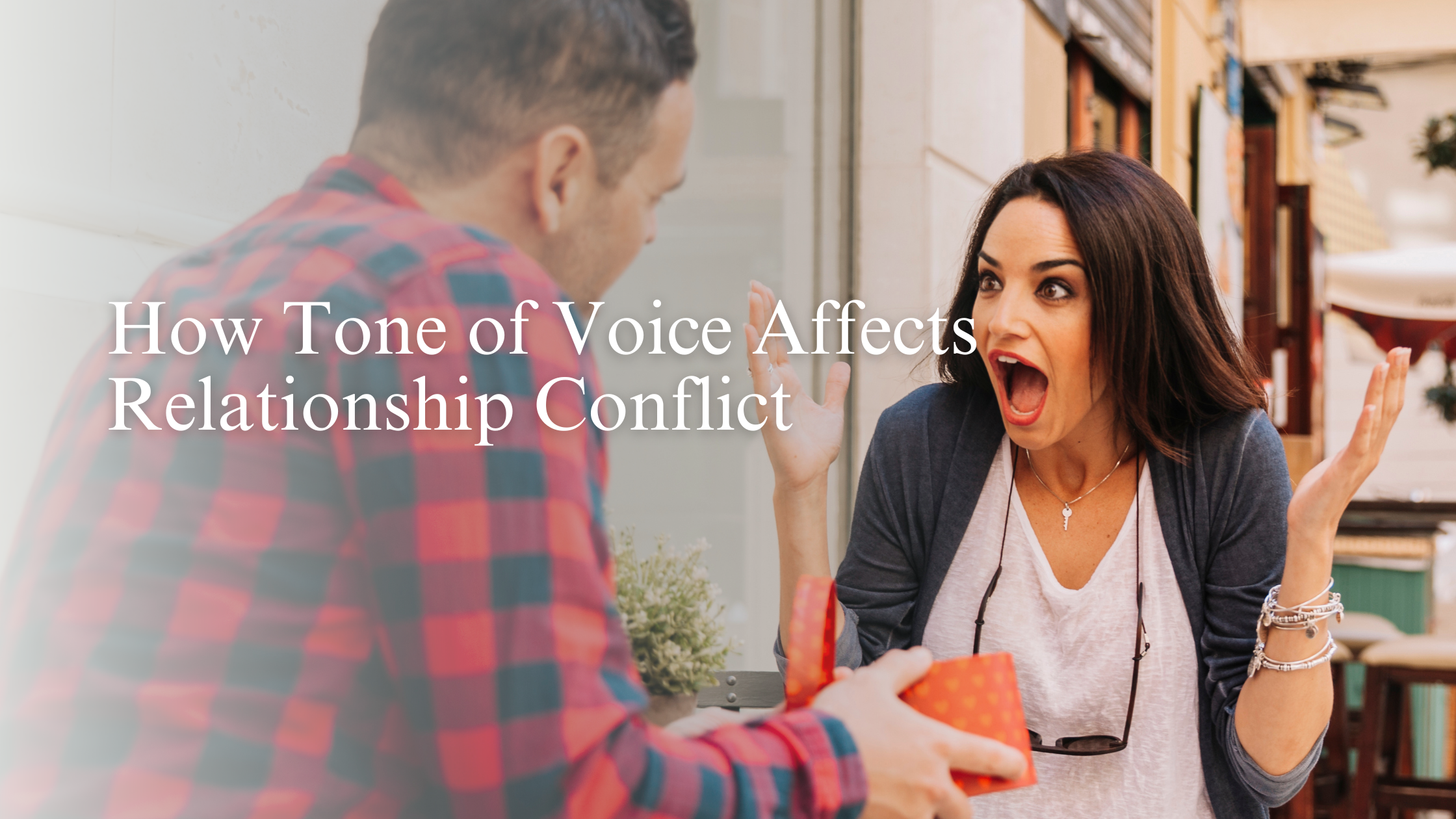
Have you ever said something simple to your partner, only to have the conversation turn into an argument? Sometimes, the problem is not the words you use. It is the way those words sound.
A short answer can sound angry. A simple question can feel like criticism. Even saying “That’s fine” can create tension when it is said with frustration or sarcasm.
This is why tone of voice matters so much in relationships. Your pitch, volume, pace, and emotional expression can change how your partner understands your message, especially during a disagreement.
In this article, we’ll look at how tone of voice can affect relationship conflict, the communication patterns that often make arguments worse, and simple ways to communicate more calmly and clearly.
What Does Tone of Voice Mean in a Relationship?
Tone of voice refers to the way words are expressed rather than the words themselves. It includes elements such as pitch (how high or low your voice sounds), volume (how loud or soft you speak), pace (how fast or slow you speak), and the emotional quality carried in your voice, such as warmth, irritation, calmness, or frustration.
In communication, there is often a significant difference between verbal content and delivery. Verbal content is the actual message being said, the words, phrases, and sentences used. Delivery, on the other hand, is how that message is conveyed. Two people may use the exact same words, but the emotional meaning can change completely depending on tone.
For example, the phrase “That’s fine” can carry very different meanings.
- Said in a gentle, relaxed tone, it may genuinely mean acceptance or reassurance.
- Said in a sharp, clipped tone, it may signal anger, disappointment, or unresolved hurt.
The words remain the same, but the tone changes how the message is interpreted and how the other person emotionally responds.

Why Tone of Voice Matters During Conflict
During conflict, people don’t just react to what is said, they react to how it’s said. During an argument, people often pay close attention to emotional cues such as tone, facial expressions, and body language. Because of this, a harsh tone can make a conversation feel more threatening or critical, even when the words themselves seem neutral.
During an argument, even a neutral sentence can feel negative when it is delivered in a harsh, impatient, or dismissive tone. The listener may focus less on the actual words and more on the emotion behind them. This can quickly lead to defensiveness.
This is where the gap between intent and perception comes in. You might intend to ask a simple question, but the other person might perceive it as criticism. These small mismatches can build into bigger communication issues.
For example:
“What do you mean?”
- Said gently → sounds curious and open
- Said sharply → feels accusatory or confrontational
Same words, completely different impact.
In conflict, tone acts like an emotional filter. When your tone is calm and respectful, the conversation feels safer. When it’s tense or critical, even simple statements can turn into arguments.
Tone Patterns That Can Escalate Relationship Conflict
Certain tone patterns can quickly turn a small disagreement into a bigger conflict. Often, it’s not intentional, but the emotional impact is real.
SarcasmSarcasm may feel like a quick way to express frustration, but it often comes across as mocking or hurtful. It can make the other person feel disrespected and defensive. If name-calling is part of the pattern too, see expert tips to handle name-calling in love that work.
Example:“Oh wow, great job remembering that… as usual.”
Raised VoiceRaising your voice can signal anger or threat, even if that’s not your intention. It can trigger a fight-or-flight response, making it harder for the other person to stay calm or engaged.
Example:“I’ve told you this a hundred times already!”
Dismissive ToneA dismissive tone can make someone feel unheard or unimportant. It shuts down emotional connection and can lead to frustration or withdrawal. When this becomes the default response, it often escalates into stonewalling in a relationship.
Example:“You’re overreacting. It’s not a big deal.”
Passive-Aggressive ToneInstead of expressing feelings directly, passive-aggressive tone hides them behind indirect or loaded statements. This creates confusion and builds resentment over time.
Example: “Fine, do whatever you want. It doesn’t matter anyway.”
This pattern is worth understanding on its own. See passive-aggressive behavior in relationships: what to do.
The good news is that tone can be changed. Small changes in how you respond can help keep difficult conversations calmer and more respectful.

How to Use a Healthier Tone During Conflict
Once you notice how tone affects conflict, the next step is learning how to respond in a way that keeps conversations calm and respectful. Here are some ways:
Pause Before Responding
Take a moment before answering when you feel irritated. A short pause can help you respond instead of reacting.
Lower Your Volume
Speaking louder does not always make your point clearer. A steady voice can make it easier for both partners to stay engaged.
Slow Down Your Speech
Speaking quickly can make your words sound impatient or angry. Slowing down can make the conversation feel calmer.
Use “I” Statements
Instead of blaming your partner, explain what you are experiencing.
“I feel hurt when we stop listening to each other.”
This is better than:
“You never listen.”
Ask Instead of Assuming
Instead of assuming what your partner means, ask for clarification.
“Did you mean that you’re upset with me?”
This can prevent a small misunderstanding from becoming a larger argument.
Take a Break When Things Get Too Heated
If either person becomes too upset to communicate calmly, taking a short break may help.
The important part is to return to the conversation when you are both calmer instead of using the break to avoid the issue completely.
Signs Tone Is Affecting Your Relationship
When tone issues become frequent, partners stop focusing on resolving problems and instead react to each other’s delivery. This creates distance and makes open communication harder.
Signs that tone is affecting relationship health:
- Frequent misunderstandings: Conversations often go off track, not because of what was said, but how it was said.
Example: A simple question turns into an argument because it sounded critical to the other person. - Defensive communication cycles: One person’s tone triggers defensiveness, which then leads to more sharp or reactive responses from the other.
Example: “Why are you talking to me like that?”
“I’m not, you’re just being sensitive.” - Avoidance of conversations: One or both partners start avoiding important discussions to prevent conflict.
Example: Holding back concerns because “it’ll just turn into a fight anyway.” This kind of avoidance is a major driver of how resentment builds in a relationship and what to do about it. - Feeling Anxious Before Difficult Conversations: If you regularly worry about how your partner will react before bringing up a normal concern, that is worth paying attention to.
When this pattern continues, it can create emotional distance and make the relationship feel less safe. Recognising it early is key to breaking the cycle and rebuilding healthier communication.
When Relationship Conflict May Need Professional Support
Sometimes, communication problems continue even when both partners are trying to stay calm and talk things through. If small conversations regularly turn into arguments, the problem may be more than just the topic being discussed. The way partners respond to each other may have become part of the conflict pattern.
It may be helpful to consider professional support if you notice:
- Feeling anxious before bringing up a concern
- Avoiding important conversations because you expect an argument
- Holding back your feelings to prevent a negative reaction
- Feeling regularly dismissed, criticized, or misunderstood
- Struggling to calm down once a disagreement begins
- Repeating the same arguments without finding a solution
If this is the specific pattern you’re stuck in, see how to stop the same fight from happening over and over again.
If communication problems involve threats, intimidation, controlling behavior, or fear for your safety, individual professional support may be more appropriate than trying to resolve the issue through communication alone.
How Christopher Joaquim Can Support You
If communication problems are creating repeated conflict in your relationship, working with a therapist can give you a safe space to understand what is happening and explore healthier ways to communicate.
Dr. Christopher Joaquim works with individuals and couples who are dealing with relationship concerns, communication difficulties, and emotional challenges. His experience can help clients look at the patterns that may be making communication more difficult.
Depending on your needs, therapy may help you:
- Understand what triggers conflict in your relationship
- Notice how tone and communication habits affect your partner
- Express your thoughts and feelings more clearly
- Work through defensiveness, frustration, or emotional distance
- Build healthier ways to handle disagreements
- Improve understanding and connection between partners
The goal is not to decide who is right or wrong. Instead, therapy can help you understand your communication patterns, feel more confident expressing your needs, and work toward healthier interactions with your partner.
If relationship conflict continues despite your efforts to improve communication, professional support may give you a clearer and more supportive way forward.
Conclusion
Tone of voice can change the direction of a difficult conversation. The words may be reasonable, but a sharp, dismissive, or frustrated tone can make your partner feel attacked before they even have a chance to understand your message.
The good news is that communication patterns can change. You do not need to get your tone right every time. Start by slowing down, noticing how you speak, listening to your partner, and giving yourself a moment to respond instead of reacting.
Healthy communication is not about avoiding every disagreement. For couples ready to work on this together, here’s what happens in couples therapy — a step-by-step guide to what to expect. Couples will still have different opinions and difficult conversations. What matters is whether those conversations create more distance or help both partners understand each other.
If the same conflicts keep repeating or communication has become difficult to manage, professional support can help you understand the pattern and work toward healthier ways of communicating.
Sometimes, changing the way you say something can be the first step toward changing how the conversation ends.
Frequently Asked Questions
Tone of voice can influence how your partner understands and responds to what you are saying. A harsh, sarcastic, or dismissive tone may make them feel criticized or attacked, while a calm and respectful tone can make difficult conversations easier to handle.
During an argument, people often pay attention to emotional cues as much as the actual words. A sharp or angry tone can make a conversation feel threatening, while a steady tone can create more space for listening and understanding.
Yes. If a negative tone happens often, it can lead to resentment, defensiveness, emotional distance, and communication problems. Over time, partners may begin avoiding conversations because they expect them to turn into arguments.
Common examples include sarcasm, shouting, a dismissive tone, and passive-aggressive comments. These communication patterns can make a partner feel disrespected, unheard, or blamed and may increase relationship conflict.
Start by slowing down before responding. Take a breath, lower your voice, and think about what you are trying to communicate. Using simple statements about your own feelings instead of blaming your partner can also help keep the conversation calmer.
Try to listen without interrupting, speak clearly about your concerns, and avoid sarcasm or personal criticism. Paying attention to your tone, volume, and pace can also help your partner feel safer and more understood during difficult conversations.
Small conversations can turn into arguments when there is already tension, unresolved hurt, or a pattern of defensive communication. In these situations, the tone of the conversation may trigger a reaction before the actual issue is fully discussed.
Consider professional support if arguments happen frequently, important conversations are being avoided, or one or both partners feel unheard, anxious, or emotionally disconnected. Therapy can provide a structured space to understand these patterns and develop healthier communication habits.
Yes. Couples therapy can help partners understand communication patterns, manage emotional reactions, express their needs more clearly, and work through recurring conflicts. A therapist can also help couples practice healthier ways to handle disagreements.
Changing your tone will not solve every relationship problem, but it can change how a conversation begins and develops. Speaking with more calmness and respect can reduce defensiveness and create more room for both partners to listen and understand each other.